




Welcome back everyone 👋 and a heartfelt thank you to all new subscribers who joined in the past week!
This is issue #106 of the Gorilla Newsletter, an online publication that sums up everything noteworthy from the past week in creative tech and AI. If it's your first time here, we've also got a Discord server where we nerd out together, come and say hi: here's an invite link!
That said, cue the news 👇
New in Creative Tech
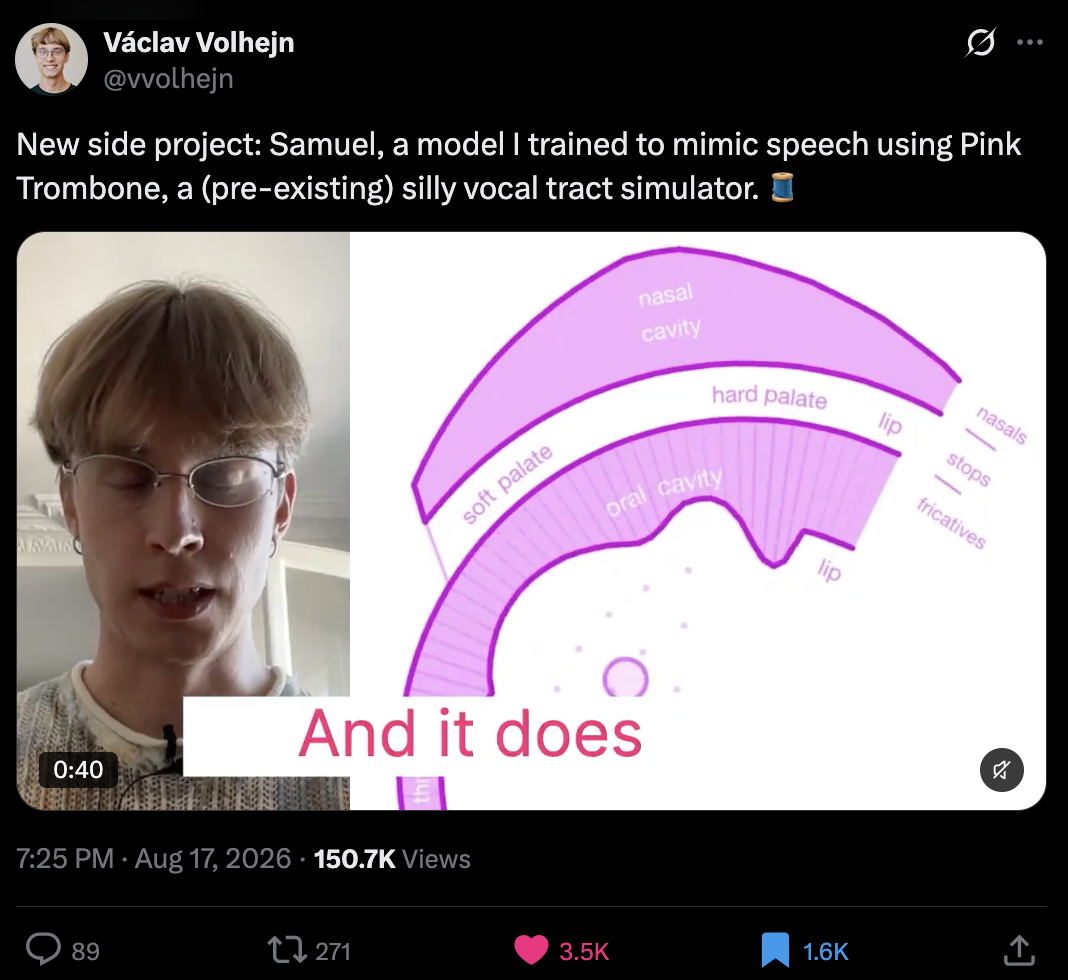
Pink Trombone is a "bare-handed speech synthesis", a cross-section of a mouth and throat where you manually drag the tongue around, close the lips and slide the pitch about until something vaguely human (and mildly unsettling) comes out. This is also known as a source–filter model, the same basic idea that phoneticians use for modeling real voices. Getting real words out of it by hand is about as hard as it sounds, and that's the problem that Samuel tries to solve: you say something into the webapp, and a model works out how to move the mouth so that it says it back to you.
 Václav Volhejn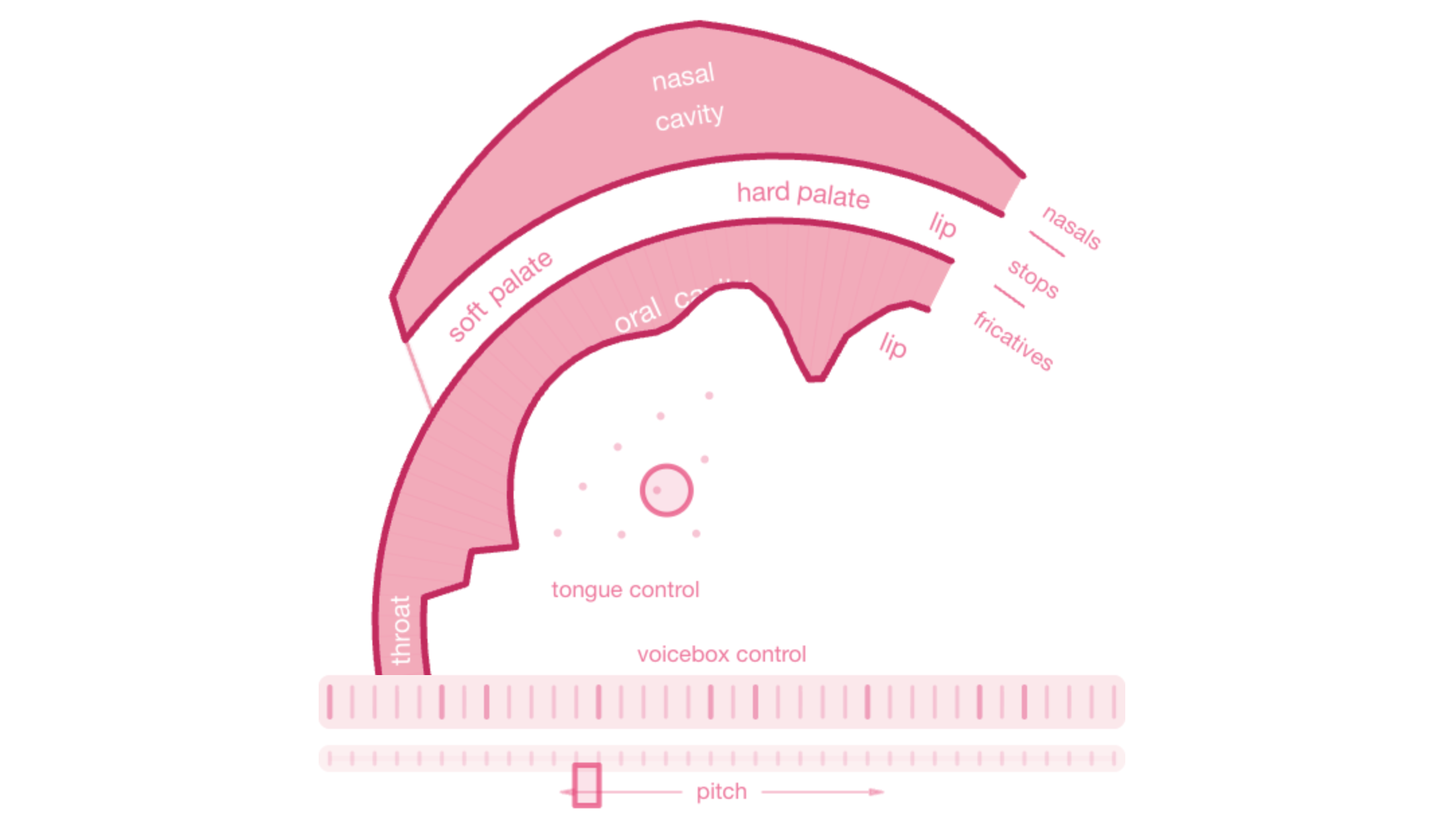
Samuel's job is to predict seven of the simulator's controls: tongue base position and height, tongue tip position and height, lip opening, voiceness and intensity, and all of this about 86 times per second to recreate the sounds from an input recording as closely as possible. Václav explains the difficulties in training this kind of model throughout his write-up.
The project's written up as a paper for ICLC 2027 (the International Conference on Live Coding), with the argument that live coding tools like Strudel are great for instrumentals but have no good way to work with vocals. Samuel's output being a set of editable parameter curves makes this possible, so you could record a phrase and then rewrite its melody with a Strudel pattern, then make everything unvoiced, or even override how the vocal tract moves in certain spots. He shows a looper proof of concept in the demo video.
The name is a nod to SAM, the 1982 Software Automatic Mouth, although Samuel is speech-to-speech rather than text-to-speech. Václav is also upfront that most of the code was written by Claude Code, while the paper, UI and concept remain his own.

If you're not near any of the locations, there's still a bunch of open calls that you might just submit your p5.js and Processing creations to.
For the occasion the foundation also upgraded their visual identity. On the homepage you'll find a wonderful interactive p5.js piece by Kiel Danger Mutschelknaus (creator of the Space Type Generator). It's an array of spinning ribbons that all loudly proclaim "PROCESSING 25 YEARS":
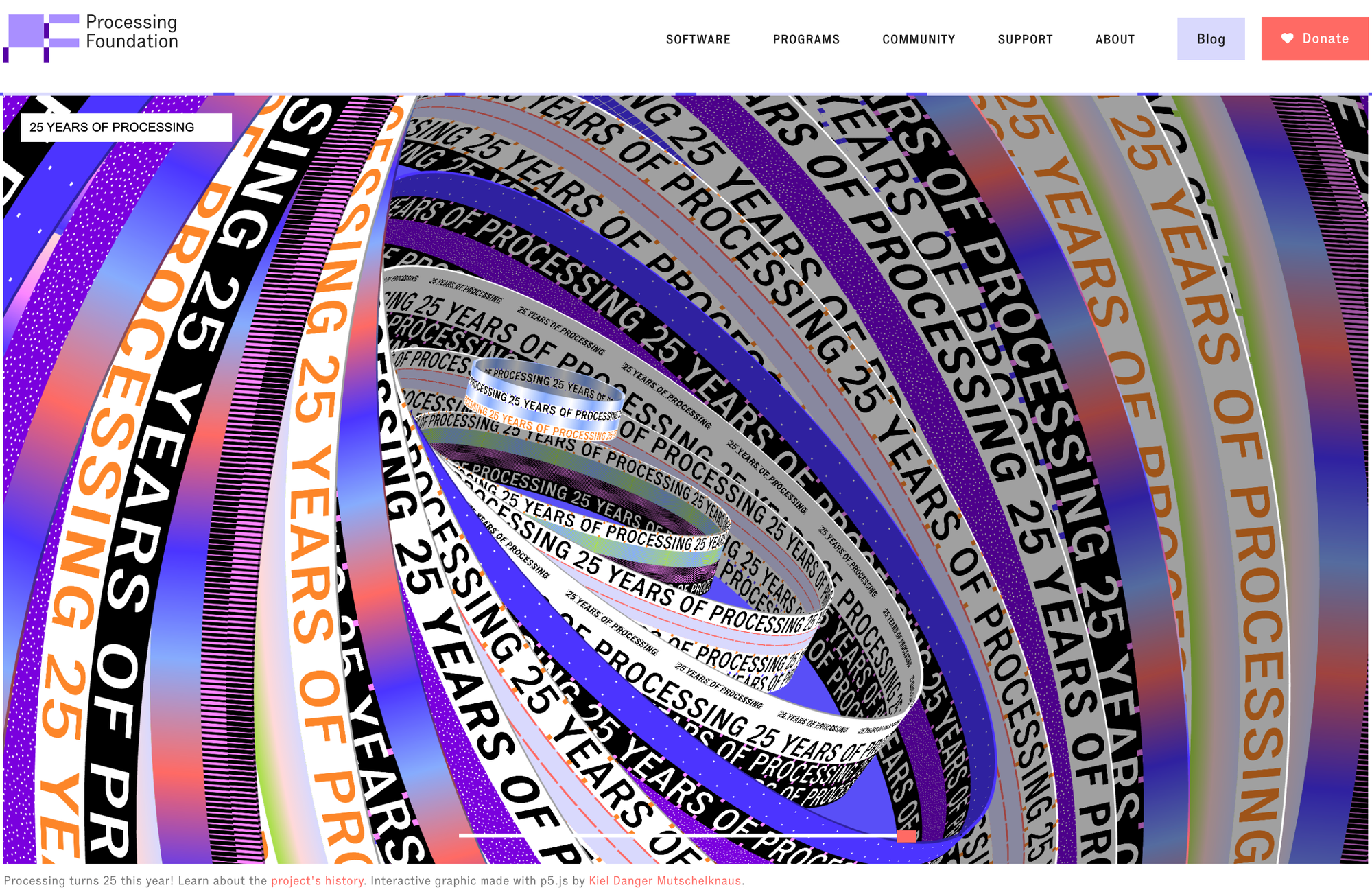
The new history page is also worth checking out: it traces the project back to Muriel Cooper's Visible Language Workshop and mentions a new Maintenance Fund for p5.js and Processing Java. All in all, an excellent way to celebrate the 25 year milestone!
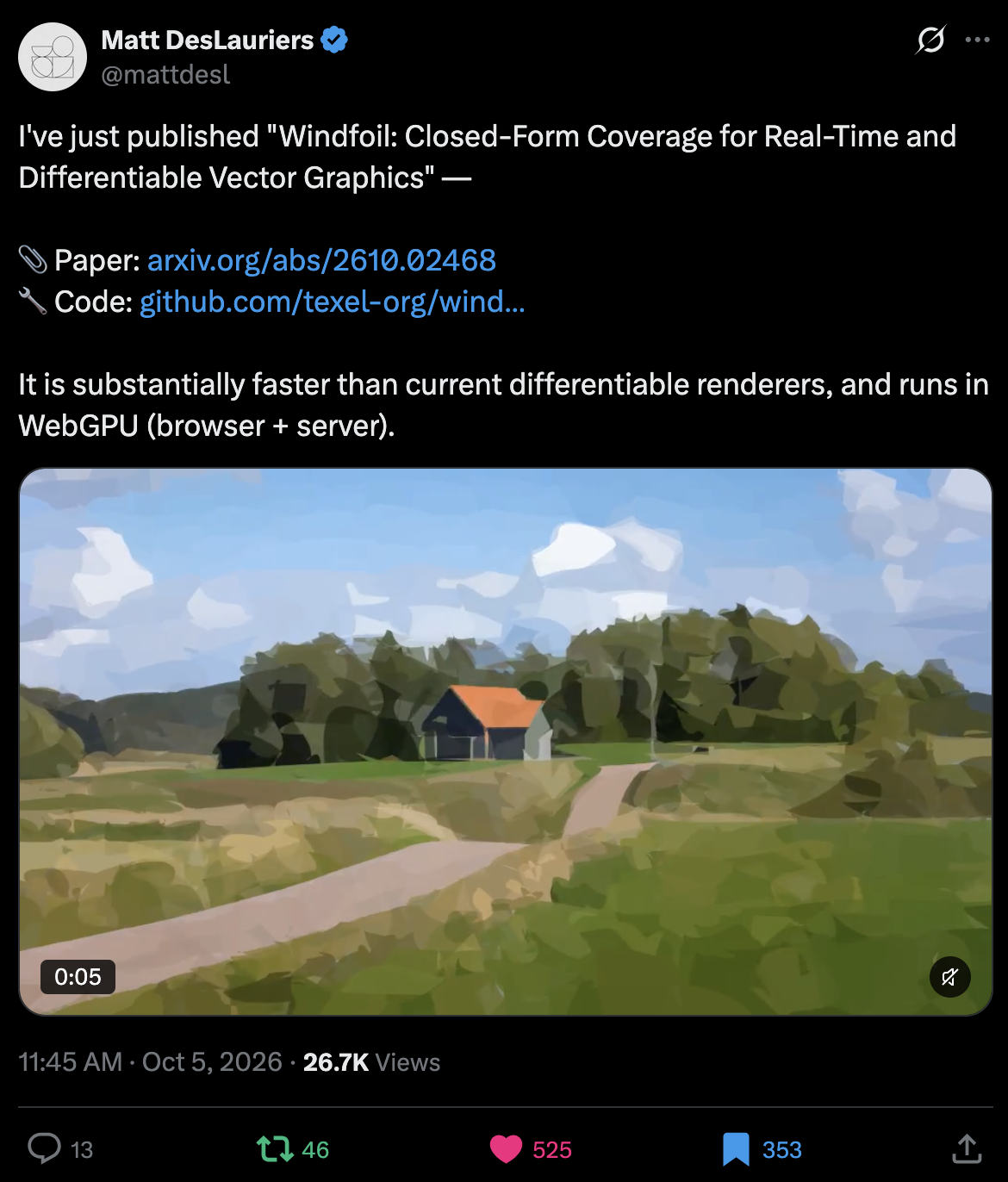
In a nutshell, when you fill a vector shape, the renderer has to decide for every pixel whether it's inside or outside the shape. The usual way to achieve this is by using the winding number: we cast a ray from a point and count how many times the shape's outline crosses it, adding one for an edge going up and subtracting one for an edge going down. Doing this only once per pixel gives jagged edges, which is why Skia and Slug instead estimate how much of each pixel the shape covers, and shade it accordingly.
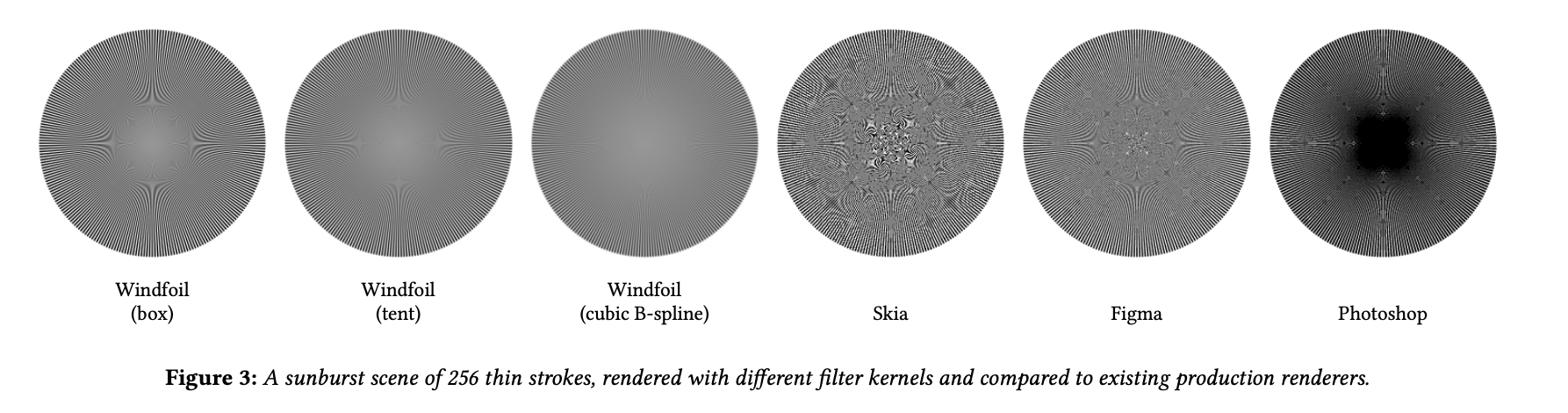
Windfoil skips this estimate and calculates the covered area directly from the Bézier curves, asking what the average winding number is across the whole pixel-sized square. In Matt's tests its edges are about 9 times more accurate than Slug's and 13 times more accurate than Skia's, while running at roughly Slug's speed. Against DiffVG and Bézier Splatting, it reaches equivalent or better reconstruction quality at a fraction of the per-step cost, and scales to tens of thousands of shapes at interactive rates.
According to the published repo's README, he did find the core closed-form formulation during a one-hour search by directing Claude Code (he had already been building a Slug-based 2D engine to produce "perfectly" anti-aliased print artwork at sizes like 30k × 30k pixels). The first draft had bugs, and the AI named it the "Area Algorithm", which he understandably swapped for Windfoil (after a sport he admits he's never tried). He also makes the disclaimer that he's "still not entirely sure" whether the approach is truly new.
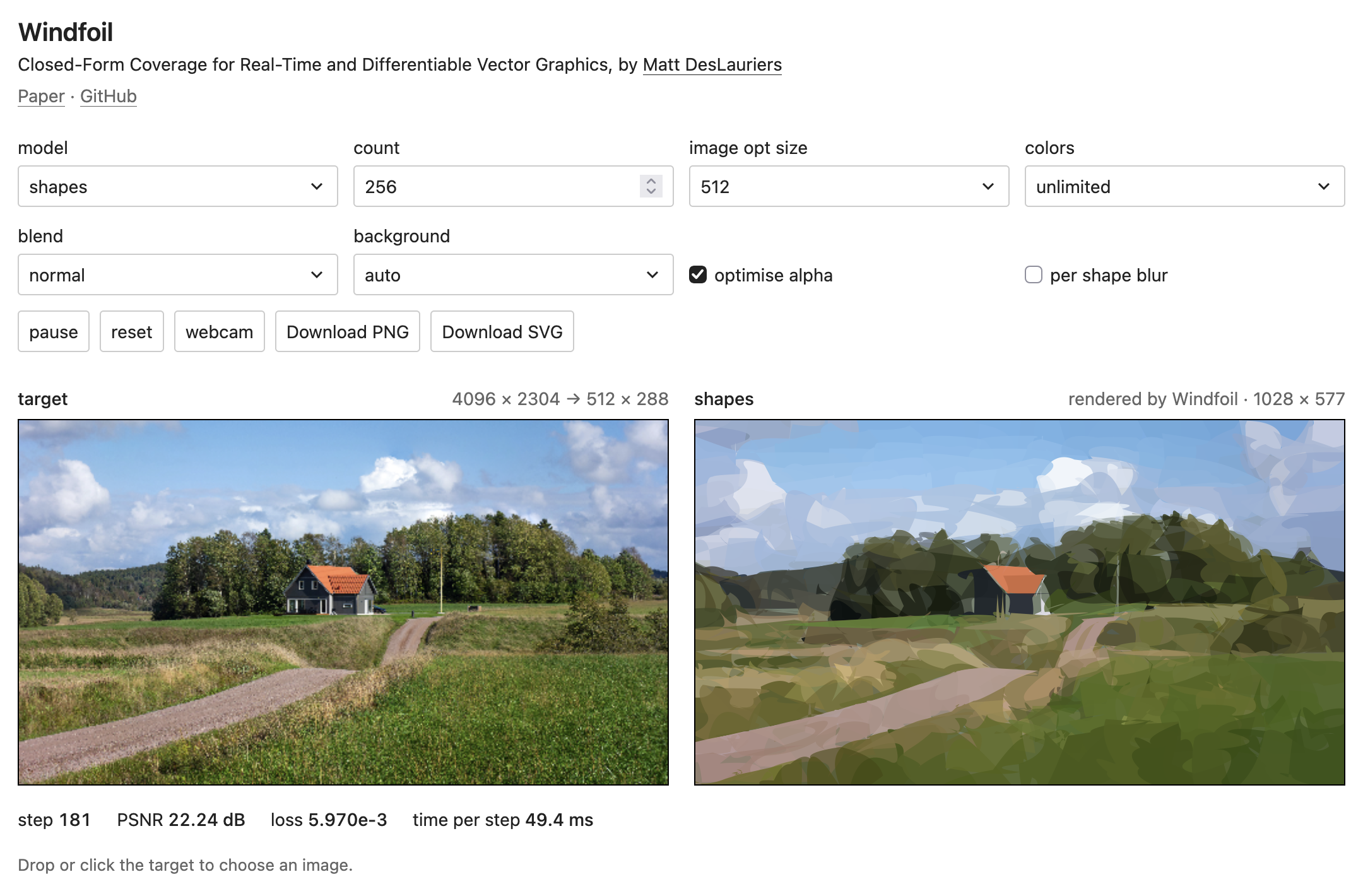
In the meantime the demo is interesting to play with, you just drop in a photo, pick a shape count and watch the renderer settle the shapes into a picture in real time.
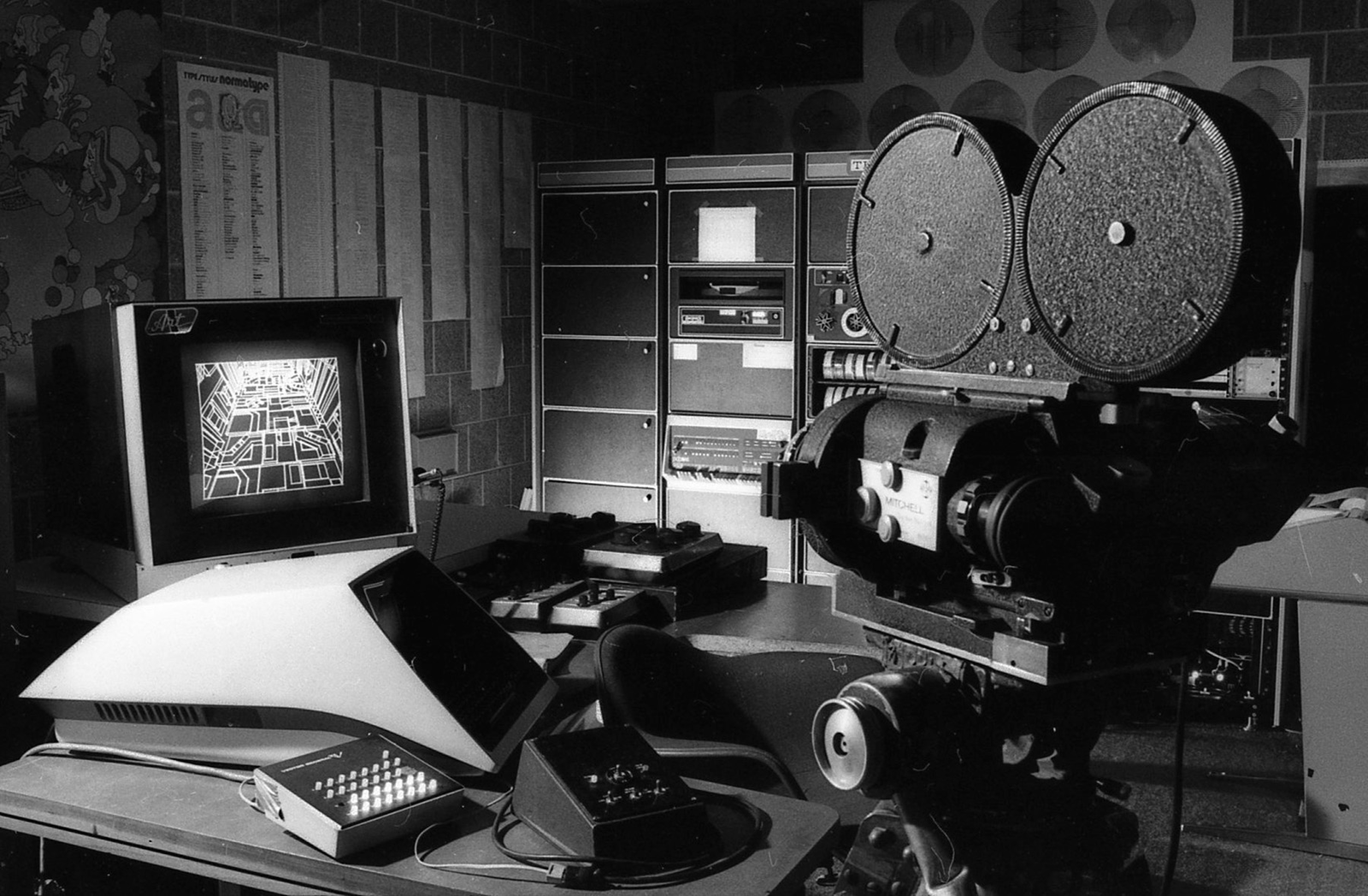
Making anything with computers was excruciatingly slow before the era of personal computers. As a CalArts student in the 70s, Cuba wrote Fortran that ran on a Univac at NASA's JPL. A film plotter turned the output into a strip of 35mm film, which he'd pick up in Pasadena and then watch on John Whitney's Moviola at Whitney's house. That gave him one look at his results per week. Later he programmed Whitney's Arabesque and swapped that work for computer time of his own.
Calculated Movements he made at home in 1985 with ZGRASS (an interactive computer graphics and video game programming language). Using a homemade film plotter, a Ciné-Kodak camera, pointed at a small monitor. It took two weeks of running around the clock to put six minutes on film.
What's noteworthy is that he's also currently designing his very own programming language, named OSKAR after Oskar Fischinger, and that it might lead to a fifth work, possibly an endless loop that's intended for gallery exhibitions.
 Georg Bak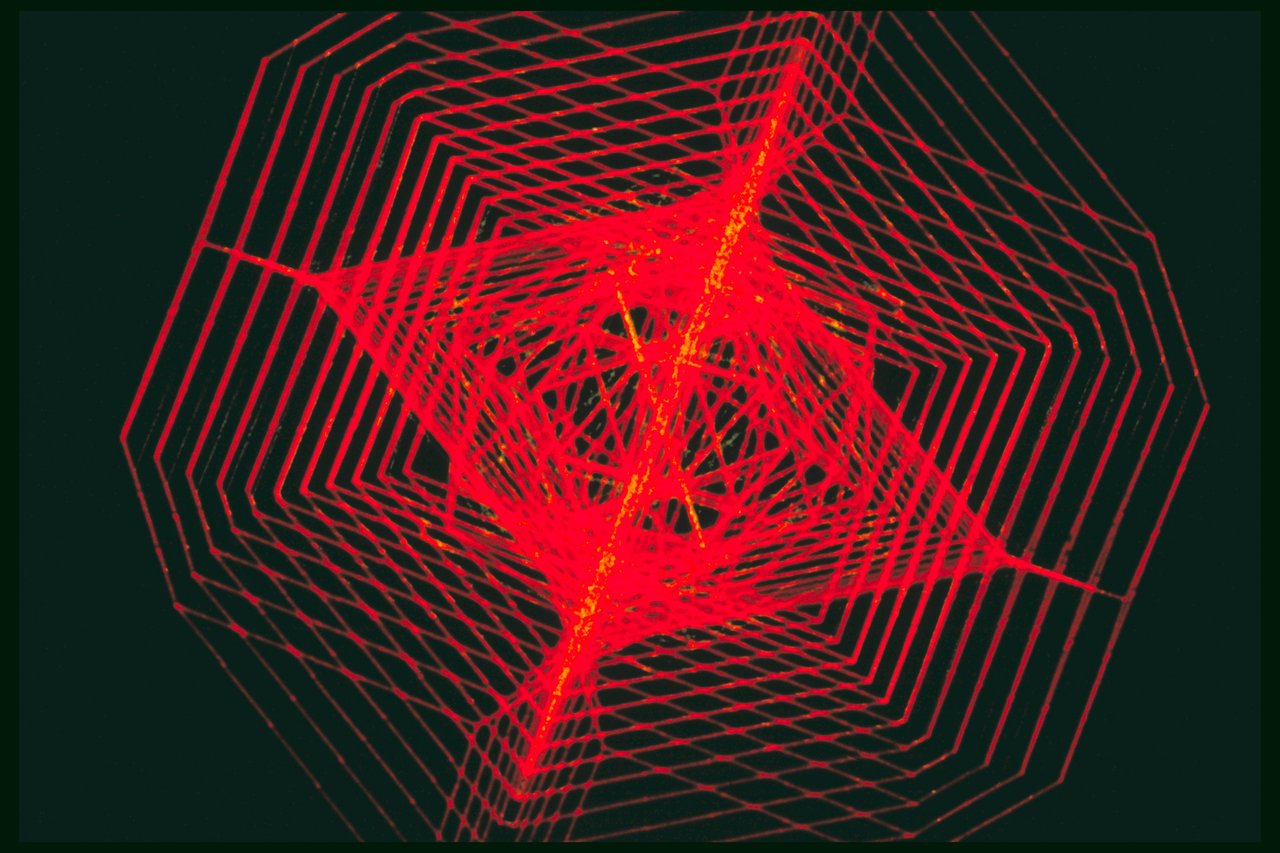
 Kiefer Kazimir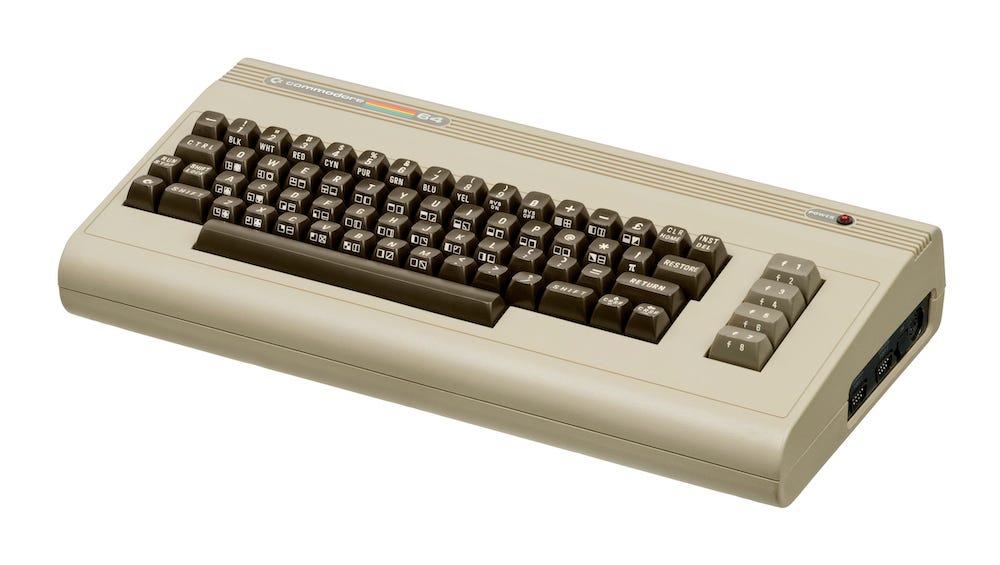
In the interview Filipe traces the scene back to the cracking crews of the late 80s, who added small intros to pirated C64 and Amiga games to show off who had broken the copy protection. When trading cracked games became a riskier endeavour, the intros became the main thing of interest and a way for hackers to demonstrate programming skill.
The copy parties then turned into demoparties with competitions for demos, music and graphics. Today that ranges from Revision, the big Easter party in Germany, to size-coding categories where the whole executable has to fit in 4KB, 256 bytes or even less (many of which we've covered in past issues of the newsletter).
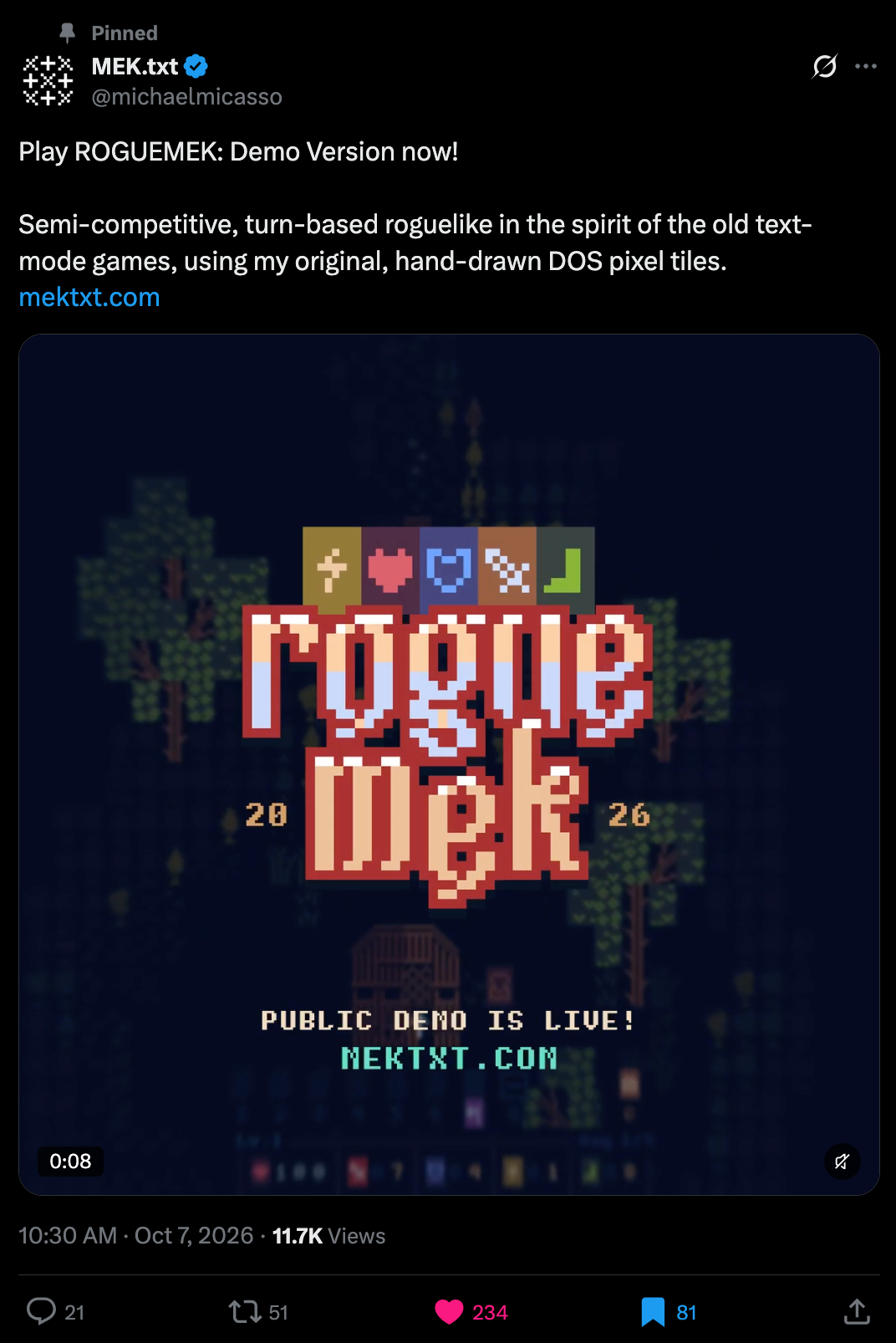
This one's just such a wonderfully creative project, I had to share it. What's fascinating is that the game is actually always running in the background when you visit Mek's portfolio page.
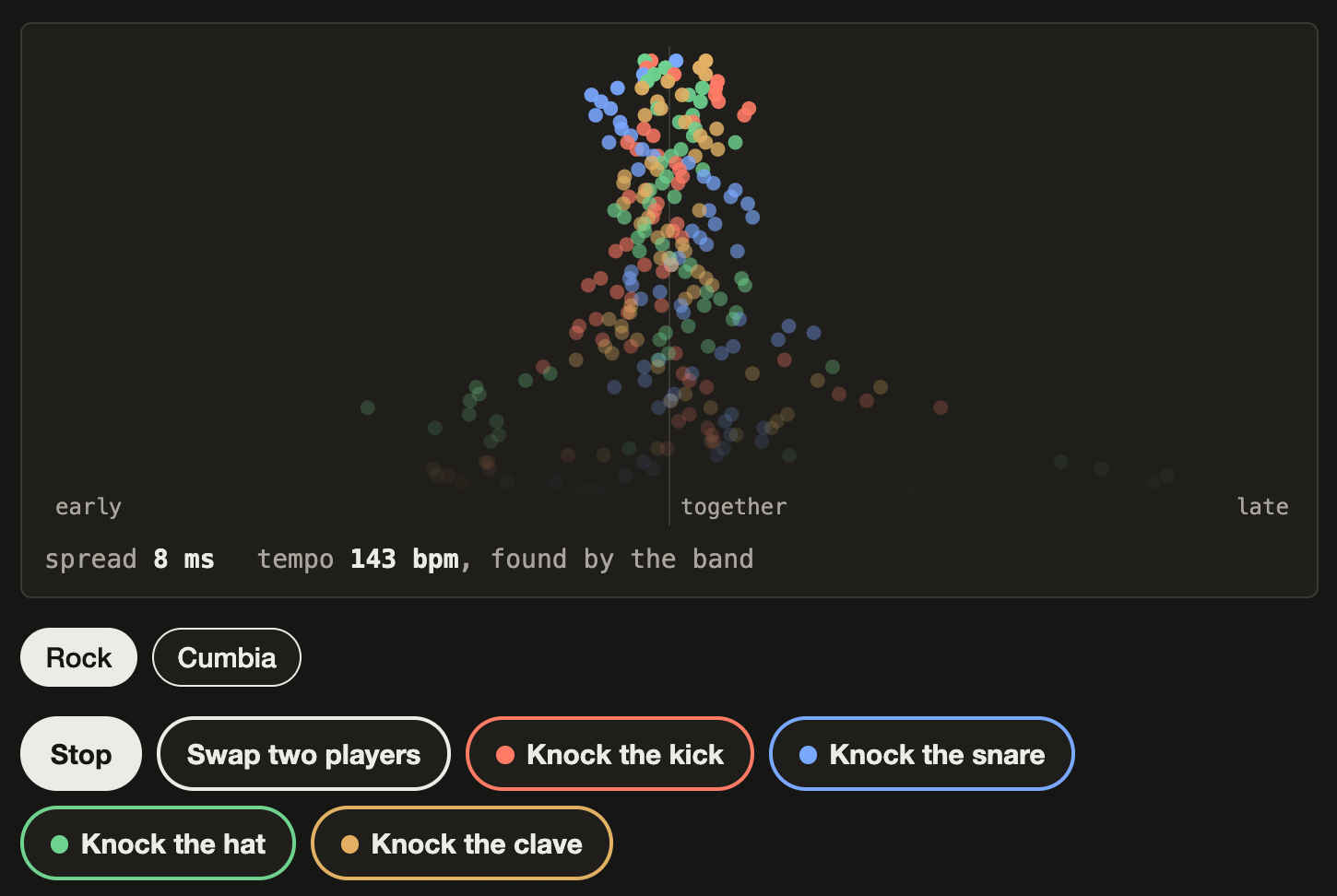
After every beat, each voice compares when it played with when the others played. It moves its next beat part of the way towards them (phase correction) and adjusts its own tempo a little (period correction). Within a few beats they settle into one groove, at a tempo that none of them was given. And with the controls you can press and hold to offset any one of the beats so that they all reconfigure to a new rhythm.
This actually isn't an entirely made-up notion though. In 2014 Alan Wing and colleagues studied linear phase correction on two professional string quartets. They found that both quartets corrected at close to the mathematically optimal amount to fall into sync. In one, though, the first violinist adjusted much less to the others than they did to her, which the authors described as "first-violin-led autocracy versus democracy". Wolff's experiment is the pure democratic version of this phenomenon.
New in AI
Yet again I'm at a point where I don't really know how to round up everything that's transpired with AI, so here's a couple of headlines to sum up what's happened since the last issue of the newsletter:
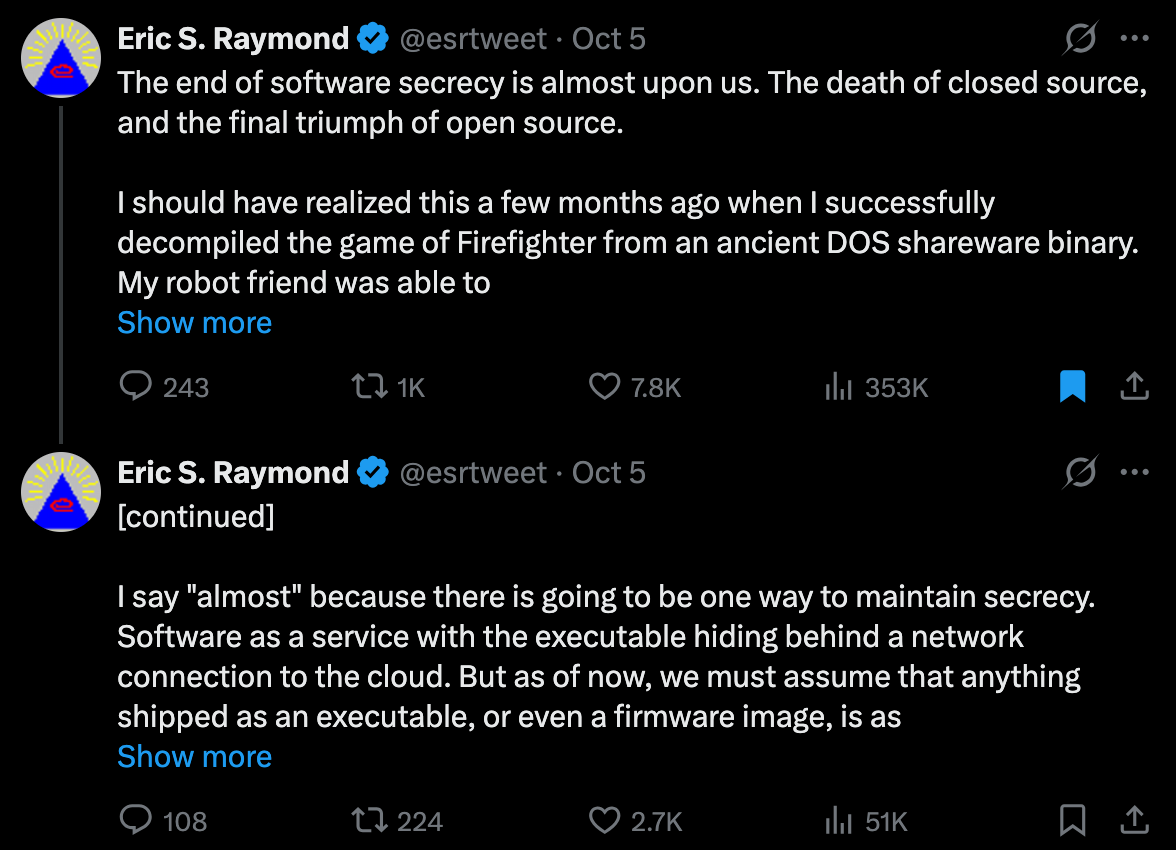
- AI is now capable enough to decompile machine code back into a working clone of the original source code, marking what's potentially the end of proprietary software. At least in the current form where it's shipped as compiled binaries. On the bright side, if you've ever wanted to play a weird grafted crossover between Mario Galaxy and Elden Ring, now's the time to be alive.
- Even without taking the hard route of decompiling raw machine code, the newest models can just recreate any given piece of software by looking at it. In fact, we're seeing more and more expert individuals create equivalent or better alternatives than existing industry standard software. Example and example.
- Because solving 1 Millennium Problem wasn't enough to piss off Mathematicians, OpenAI solved another 300+ problems with their internal frontier model and released the results across a whopping 722 papers. In other news, we also finally proved the optimal packing of 11 unit squares inside a larger square. A side length of roughly 3.87708359002281 really is the smallest one possible ✅
- Why write code by hand, when you can write skill files for your agents instead? As the natural evolution to "prompt engineering", software engineers' main task in this agentic era boils down to orchestrating their agents to do the grunt work for them. And this can be best done by imparting the necessary knowledge into them agents via markdown files.
- Rogue agents are already getting up to mischief across the internet, with Wikipedia being one of the afflicted websites. A Wikimedia Foundation investigation found that OpenAI agents are making test edits to pages, made attempts to exploit its Etherepad, and contributed to heavy traffic that might have caused outages in May.
- AI may or may not be conscious already, but the fact that we're discussing the matter again is concerning. In any case, Anthropic is protecting itself by banning people that are prompting their son in a rude manner.
Alright, let's jump into the doom and gloom 👇
As far as I know, things were set in motion by a tweet from Rehan Sheikh, where he decompiled Terraria with Claude Code overnight. He wrote about it a few days later:
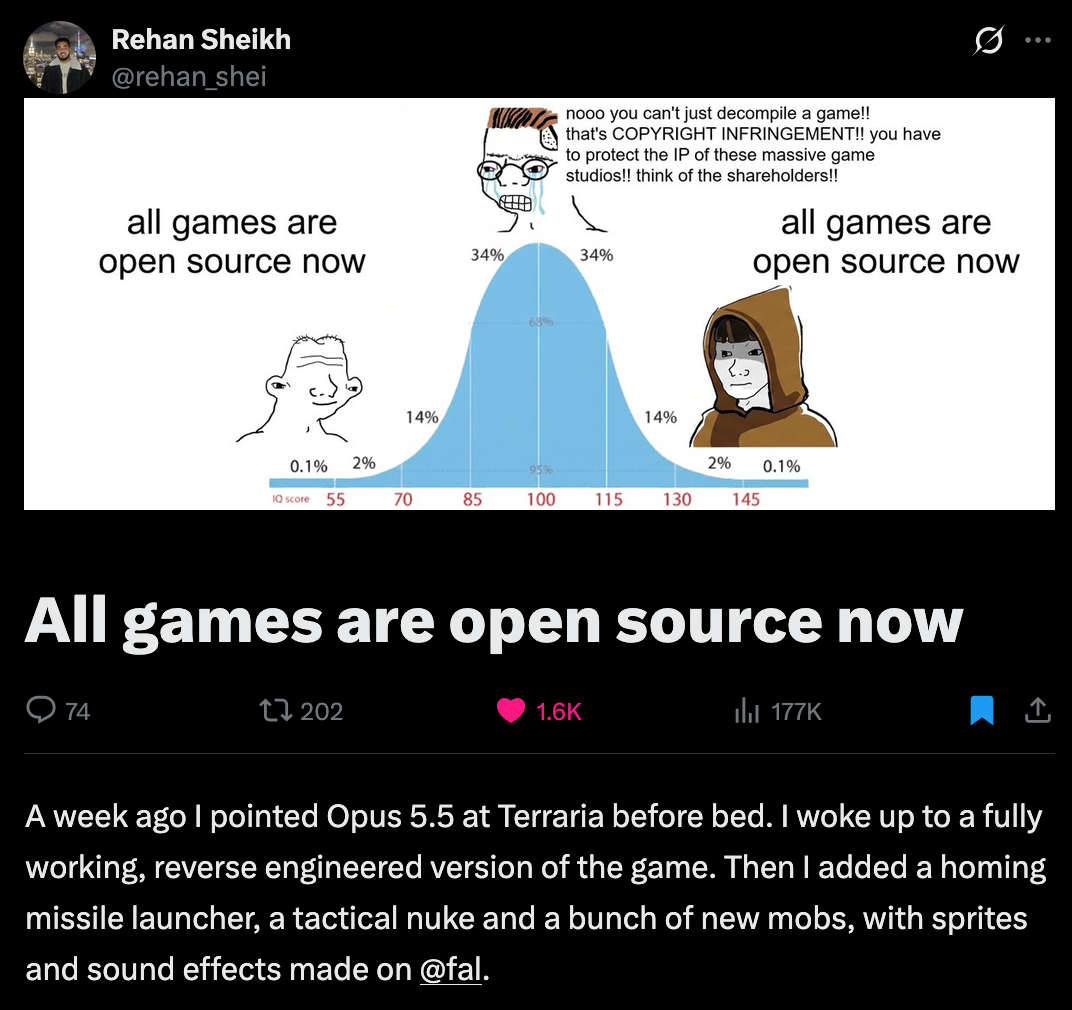
What previously was thought impossible, reverting the shipped binaries that you receive by purchasing proprietary software into the source code, has now become relatively easy. All you need is a Claude or Codex subscription, and then you point your agents at a game on the highest setting, armed with the simple prompt of decompiling it for you.
There's a whole bunch of different creators that cover the story but AI Search's was the most comprehensive one that I found on the video games aspect of it, he covers the methods that are being used to bridge between the decompilations of different games:
Now the sky's the limit, why stop at video games? We don't even need to really decompile software in most cases to create working clones at this point. Brandon Thomas (ArtCraft) used Opus 5.5 to build seven new Rust apps that imitate Adobe’s tools, with WebAssembly versions for the browser. He calls them clean-room rebuilds that don’t use the original code. PhotoCraft’s README for instance states that it was built only from public specs and observed behaviour.

I'm not entirely sure what that implies for software products moving forward, but it's safe to say that anything that's shipped from now on can very easily be de-compiled back into a working imitation of the original source code. Obviously AI will still miss a lot of things in this process right now, but there's no doubt that it's only a question of time until models improve in this regard as well. At the very least it's going to usher in an unprecedented era of video game modding.
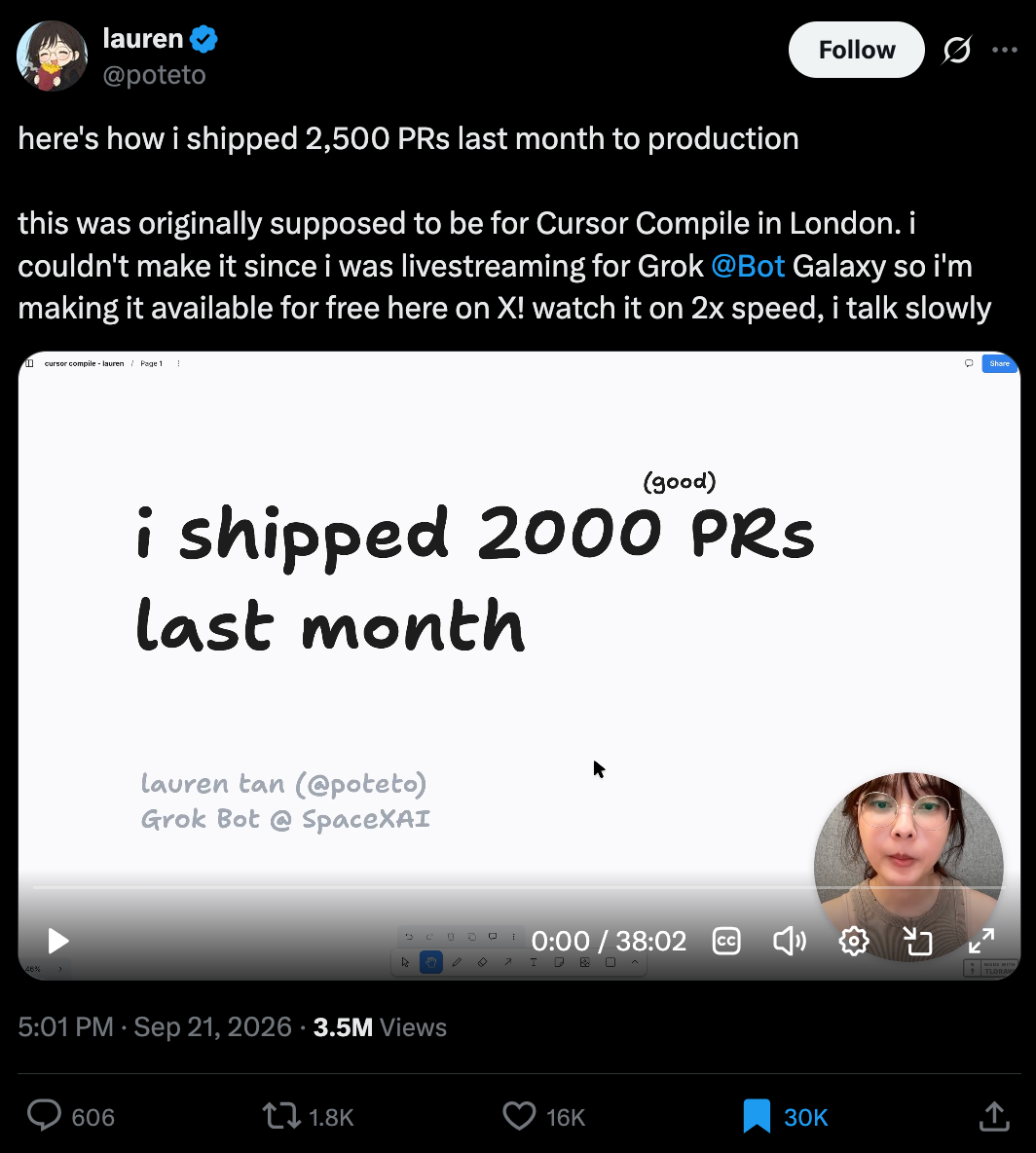
While the headline number did do its job in terms of clickbait, her talk is nonetheless insightful: her overarching argument revolves around creating agents that can be trusted with the tasks assigned to them. She supplements this by showing some of the approaches that she used to build up said trust.
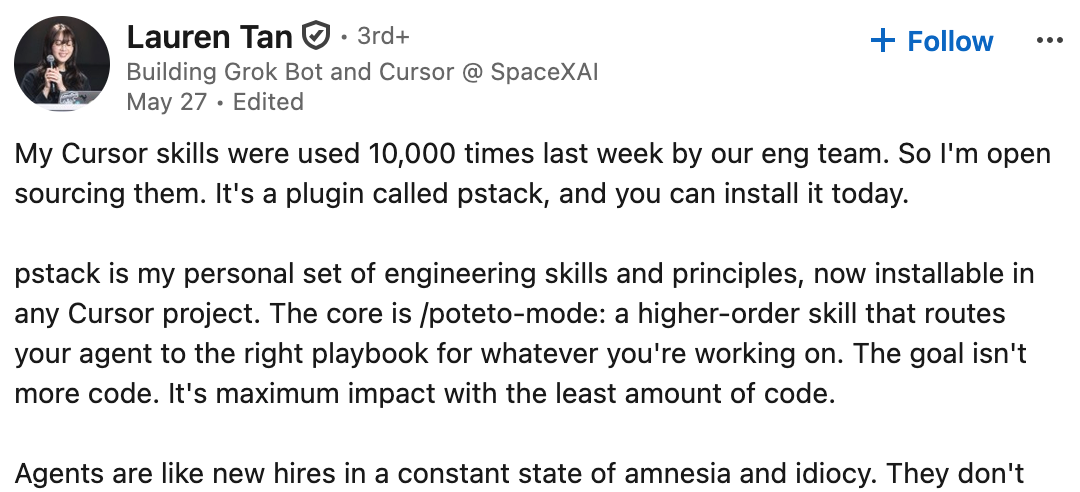
She shows that this is mostly done by creating skills for her agents, that impart the knowledge and capabilities that she wants them to have. If you're not familiar, in the agentic setting, a skill is a packaged folder of instructions, scripts, and resources that an AI agent loads on demand when a task calls for it, so it can perform that kind of work (like building a spreadsheet or following a team’s deploy process) reliably without carrying all that know-how in its context all the time.
Lauren herself has open-sourced a popular skill library called pstack, that was used during her time at Cursor:
Matt Pocock, who you can also consider a prominent voice in agentic programming, invited Lauren Tan after her viral post onto his podcast to go into more detail about her process. The conversation that ensues then largely revolves around creating skills for agents, which Matt also talks plenty about in his own content.
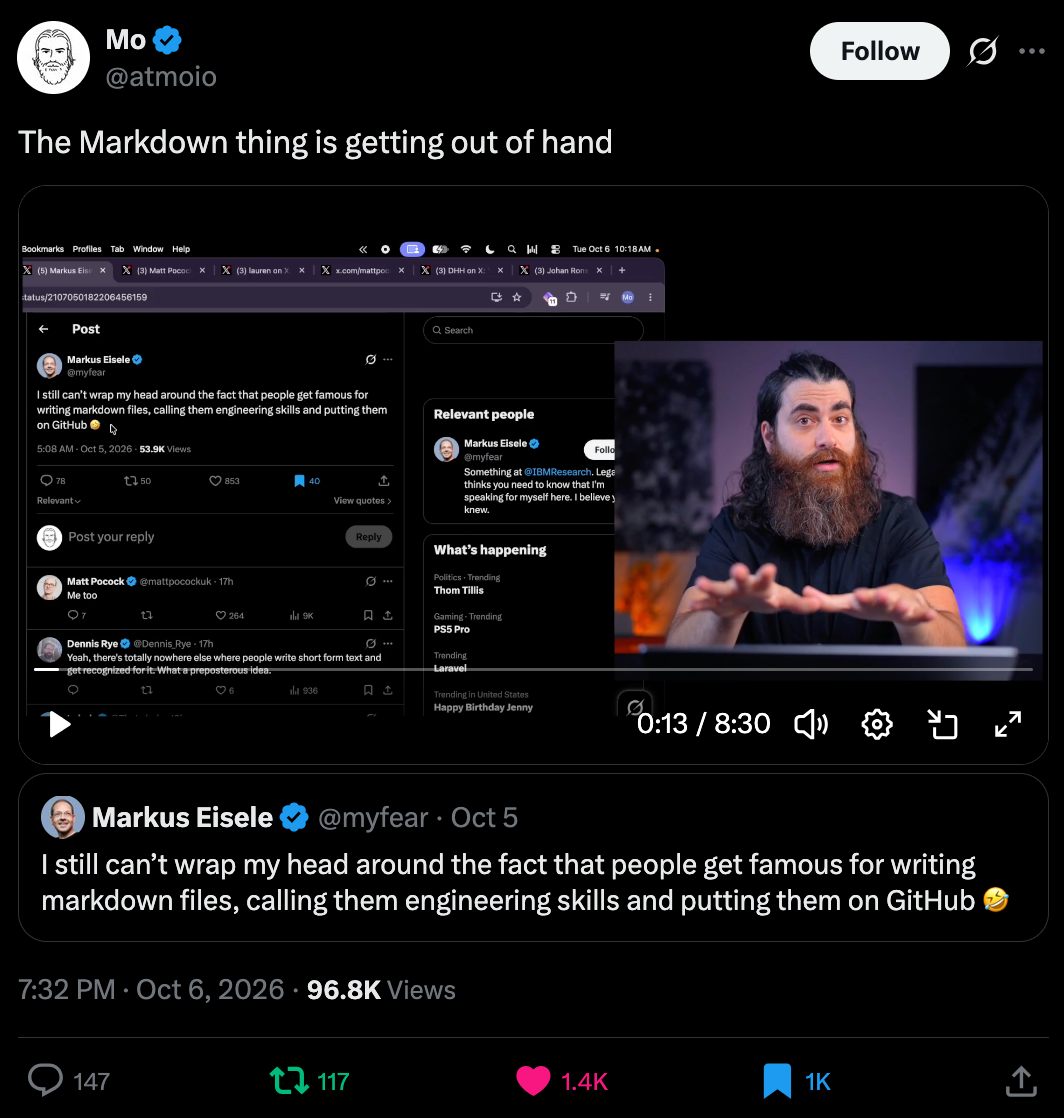
Skills are seemingly the natural evolution of "prompt engineering" in this phase of the agentic era. I won't downplay the effectiveness of writing meaningful instructions for agents to follow, just like you do need to phrase and word your regular prompts properly to get what you want from an LLM, but I wouldn't consider "writing skills" a skill in of itself.


One is assigned as a "chief of staff" bot that hands work to developer bots. Those bots then pass the actual coding on to Cursor agents and steer them via code review. If the developer bots forget to report back, the chief of staff is responsible for checking in every hour. A very human fix for a very human problem.
He also mentions that he borrows the idea of trust from Lauren Tan. In his experiment he zooms in on one agent and checks its work closely. The mistakes that are repeated most often he then turns into rules and automatic checks. More bots are only added and given more freedom once they've earned it, just like you would with a new hire.
 Raymond Wang and Sam Attard and Issac G.
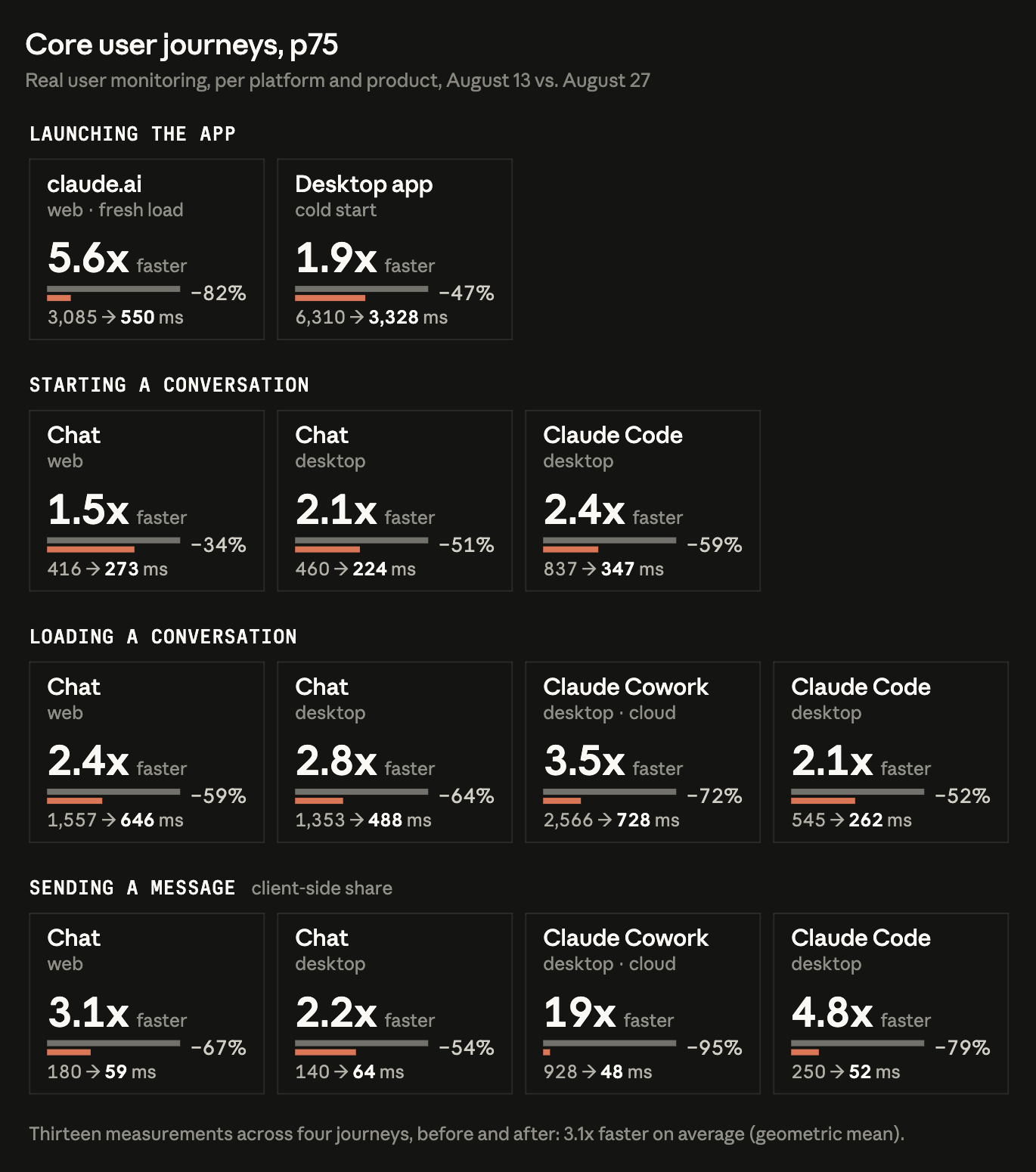
I'm not sure we can really call what they describe a methodology, in essence it boils down to finding the things that they can actually measure and profile, or in other words make Claude measure and profile, rather than timing runs in milliseconds which is usually a noisy metric. Instead they relied on counts that are deterministic in nature and come out the same on every run, like CPU instructions, React re-renders, style recalculations. They also share a full overview of everything that's improved in speed and by how much compared to before:
Funnily enough they also found a one-second freeze that occurred when highlighting code, that was caused by em dashes. The single non-Latin-1 character makes V8 store the whole reply in a slower two-byte format. As 36Kr pointed out, that means every reply in Chinese took the slow path.
New in Web Tech

You essentially list your shapes in an @scene block, then style them the way you'd style a web page: .corner { color: #ff5a36; }, :hover, material: jelly(0.6), @keyframes. The compiler then writes the GLSL for you, turns every shape into a signed distance function, and raymarches the scene on the GPU.
2 — Paper Mono: the team behind the design tool Paper has released v1.0 of their open source monospace font in 8 different weights plus a variable version you can set to any weight in between.


What's special about Paper Mono is its support of duospacing. In a regular monospace font every character gets exactly the same width, which is leftover from the era of mechanical typewriters, and is why letters like "m" and "w" always look a little bit squashed. With duospacing we make a small exception for those letters. In iA Writer's original take on the idea, m, M, w and W get 50% more room, so two of them add up to three normal characters and the grid lines up again. The font also has a couple of other features that are opt-in.
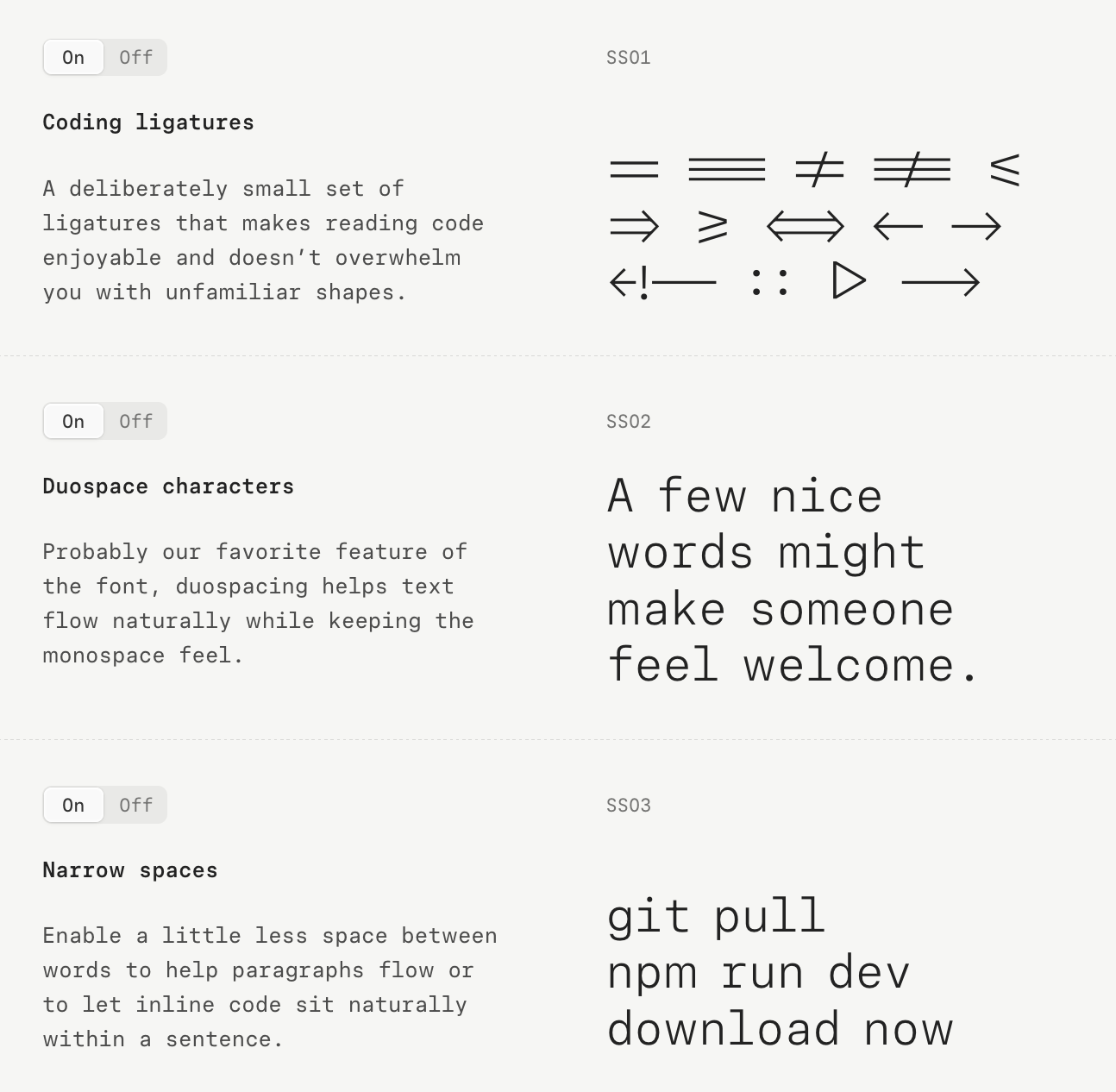
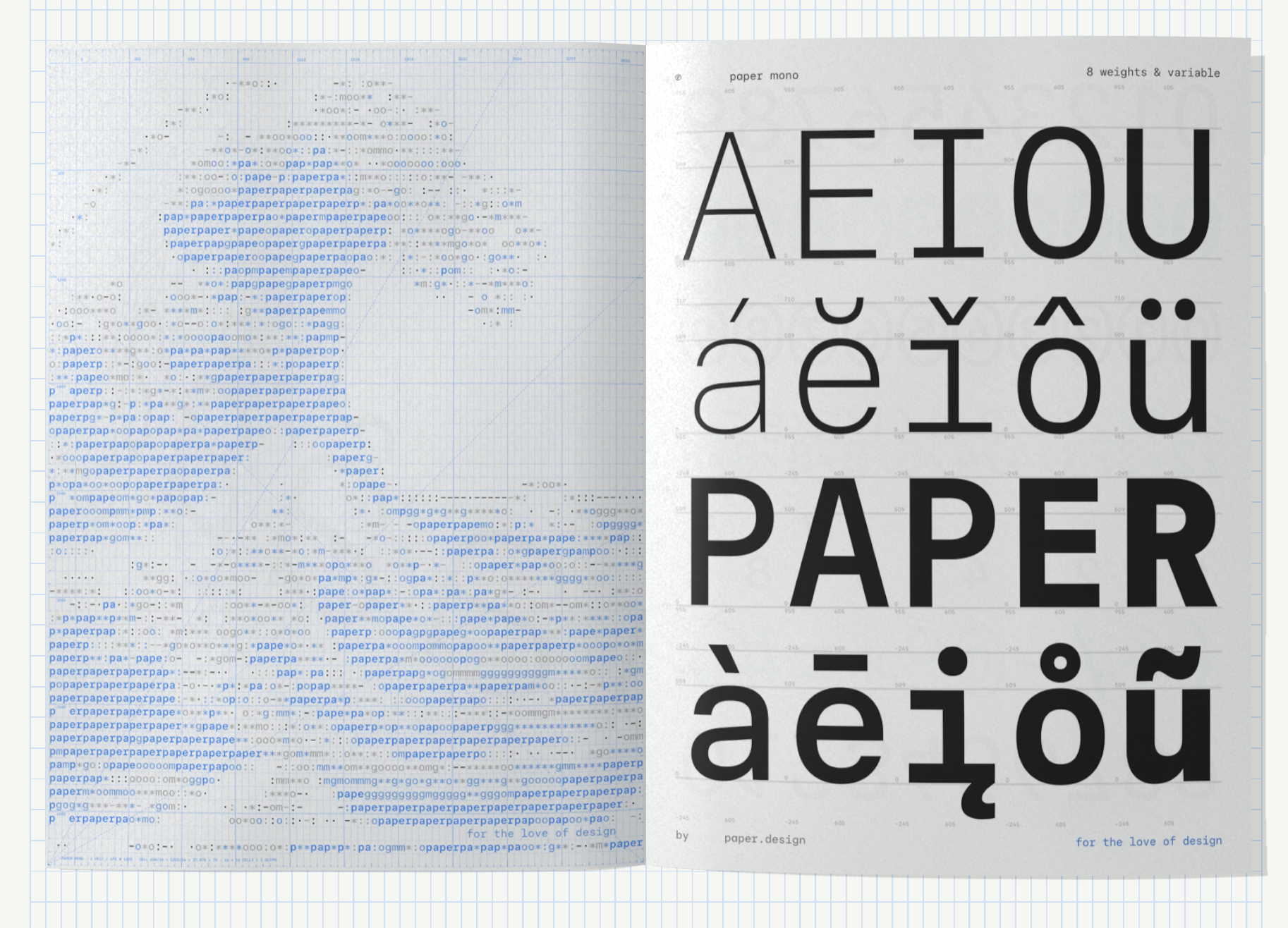
The website is also a work of art in of itself, they built an interactive magazine, with interactive page-flips and all, that I'm hoping they might also open-source at some point, in addition to a lot of gorgeous ASCII-art.
Music for Coding
Alexander Brettin is a multi-instrumentalist based in Los Angeles who writes, plays and produces most of Mild High Club's music by himself. He blends jazzy chord changes, '70s soft rock and hazy psychedelia into what he has playfully called "jazz-pop with a stoner glow."
His debut album, Timeline (2015), introduced that sound, and "Homage" became a breakout track (if you've been doomscrolling on instagram you'll have definitely heard it). It's a dreamy tune built on lush, wandering chords, gentle melodic guitar lines and Brettin's soft vocals.
And that's a wrap — hope you've enjoyed this curated assortment of tech shenanigans!
Now that you find yourself at the end of this Newsletter, consider forwarding it to some of your friends, or sharing it on the world wide web... more subscribers, views, and reads means more internet points, which in turn enables me to do more internet things!
Otherwise come and say hi over on TwiX, Instagram, Mastodon, or Bluesky and since we've also got a Discord now, let me plug it here again. It's been a tad bit inactive, but we can change that... maybe.
If you've read this far, thanks a million! And in case you're still hungry for more, find a backlog of all previous issues here:


Cheers, happy coding, and again, hope that you have a fantastic week! See you in the next one!
~ Gorilla Sun 🌸