


Welcome back everyone 👋 and a heartfelt thank you to all new subscribers who joined in the past week!
This is the 83rd issue of the Gorilla Newsletter - a weekly online publication that sums up everything noteworthy from the past week in generative art, creative coding, tech, and AI.
If it's your first time here, we've also got a discord server now, where we nerd out about all sorts of genart and tech things - if you want to connect with other readers of the newsletter, come and say hi: here's an invite link!
Queue the news 👇
All the Generative Things
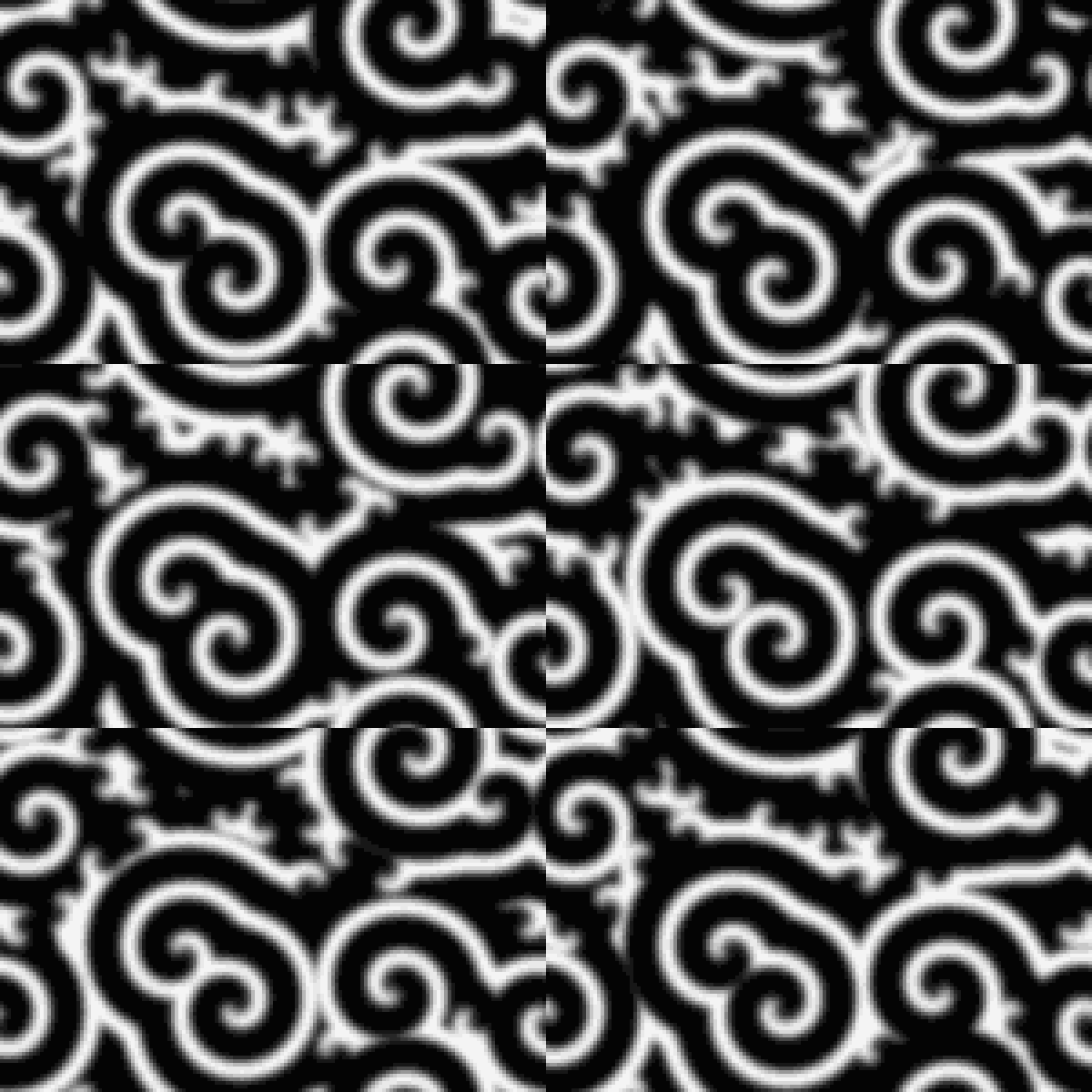
In code this reaction can actually be captured as a cellular automaton that comes to life in just a few lines of code; Patt Vira tackles this in a recent video of hers, teaching us how to implement it in P5.
Patt points out a short paper by Alasdair Turner back from 2009, that she uses as a basis for the video, and that shows the formulas to create the swirly patterns. In essence each cell of the cellular automaton computes its state based on the values of the surrounding cells, similarly to how reaction diffusion can be modeled as algorithmically.
Over the weekend I ended up playing a little with the code, creating a few broken versions, as well as the animation you see above. As always, really appreciate Patt's efforts in breaking down these algorithms–felt very refreshing to do a coding tutorial for the first time in a while again!
This particularly makes a lot of sense in the case of SVGs, since SVGs are text based, the source code can simply be embedded as a <!–– comment ––>. For bitmap based image formats, like PNGs and JPEGs, this becomes trickier, but is also feasible; Jos Vromans wrote about the topic in a recent article of his–explaining how source code can be hidden within a PNG file by leveraging a number of smart observations.
 Jos Vromans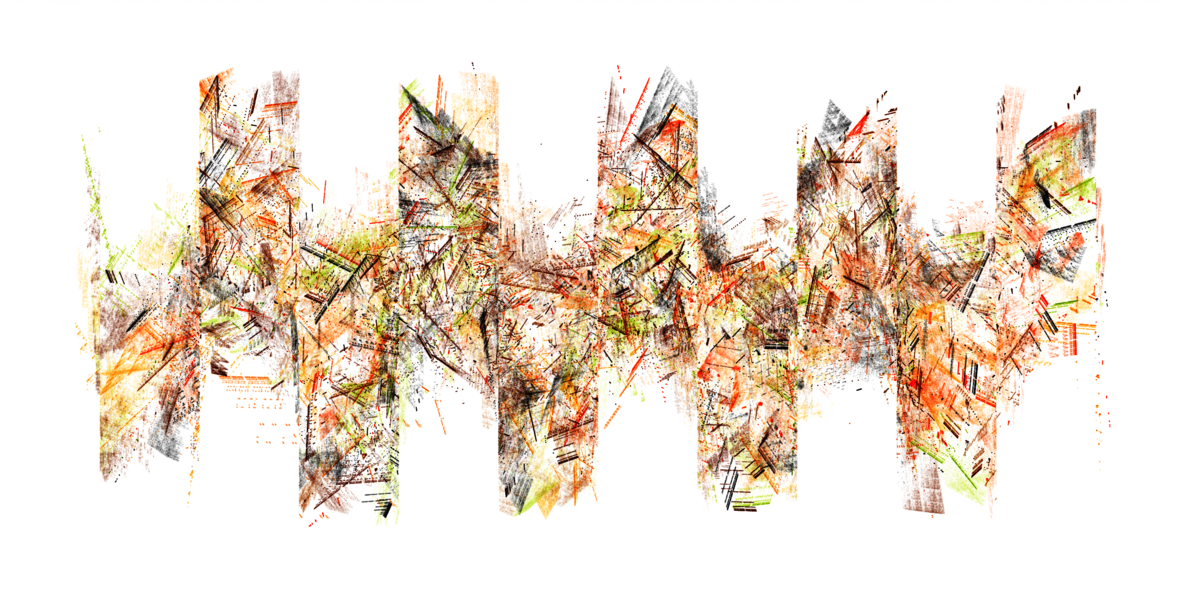
A PNG is in essence a bitmap of pixel values, where pixels are composed out of three RGB values, each one of them represented by 8 bits. This means that one pixel holds 24 bits of information overall. In the article Jos points out that a change to the least significant bits (LSB) of each RGB component is visually imperceptible, demonstrating it with an interactive example—you need alter quite a few until the image devolves into something unrecognizable.
This basically means that we can substitute the LSBs of an image's pixels without anyone really noticing, and actually store meaningful information instead. If you put one and one together, we can now convert the characters that make up the code into an ASCII encoding and store them in the image. I recommend reading Jos' article for the full details.
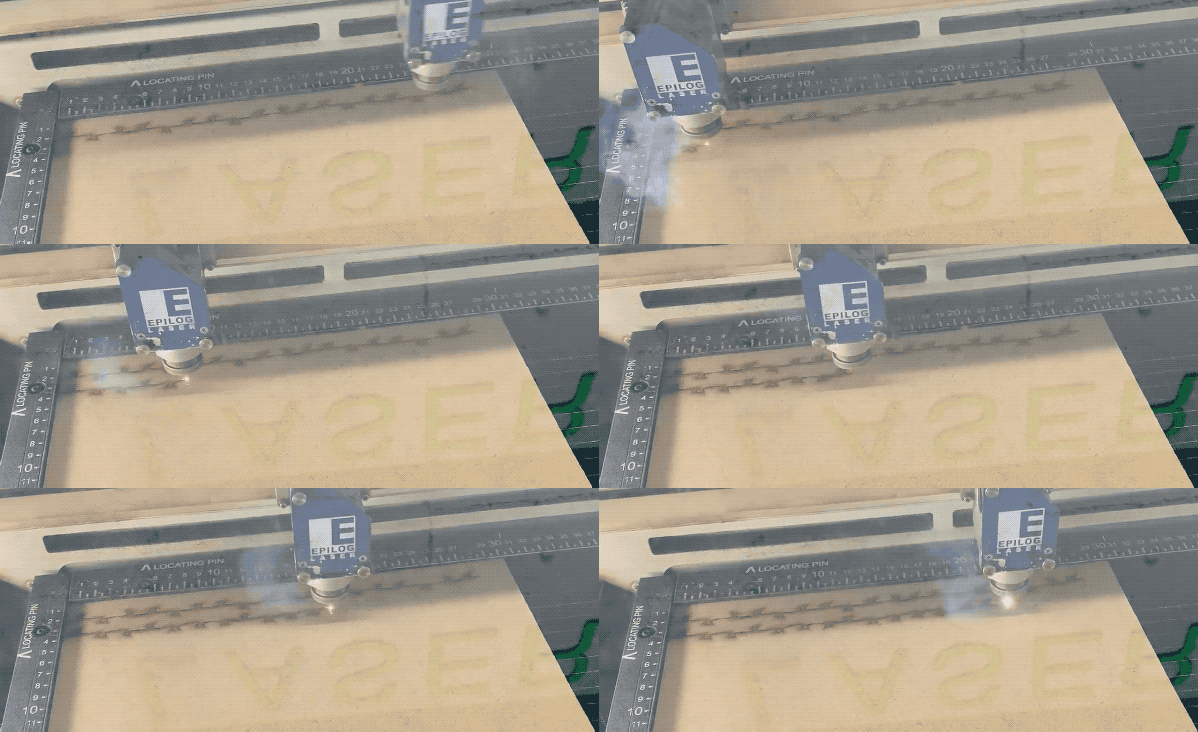
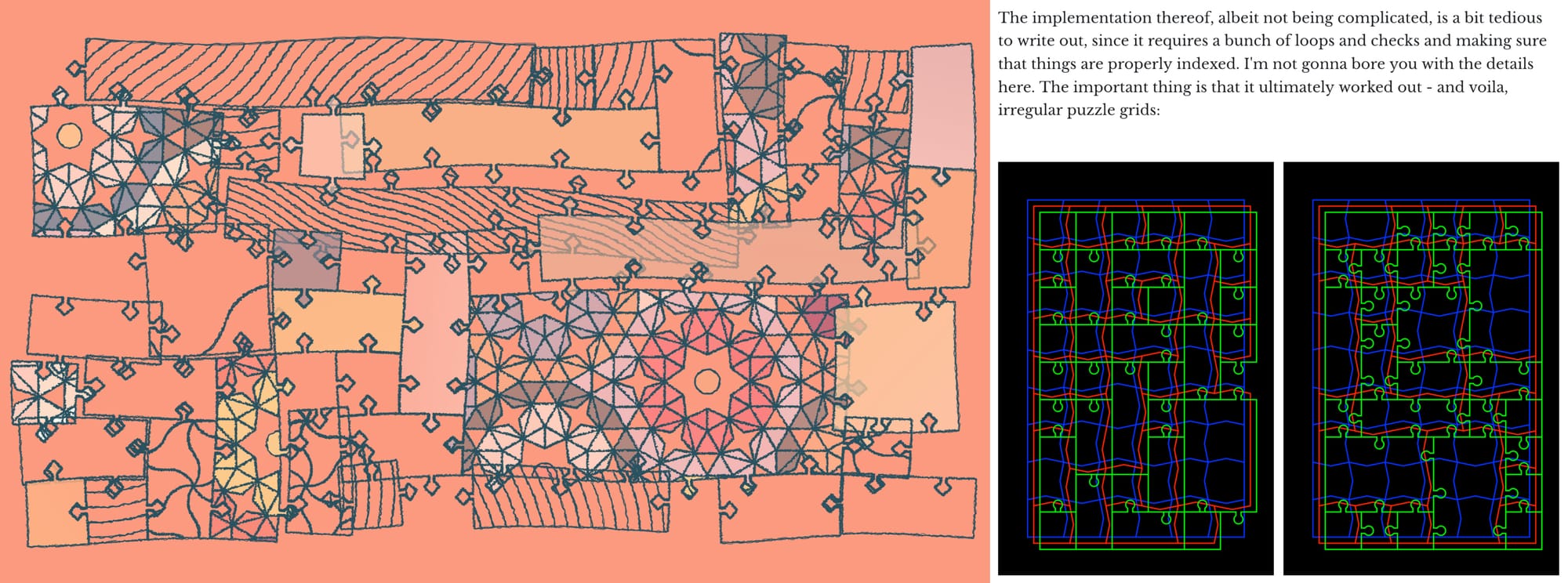
Juri's approach is quite straightforward: he creates a grid, deforms it slightly—so that the edges between tiles are a little slanted—and then replaces these edges with the connector/knob-like shape that you commonly find between two puzzle tiles. To this day, I still don't know what they're actually called. If you aim to create plottable SVGs this is sufficient and does the job, it gets a bit trickier when you want the individual puzzle tiles to know their actual adjacency, as well as the inwardness/outwardness of their attached connectors.
This is what I tackled earlier this year, for a generative artwork I titled Some Parts of Me. The logic for creating the grid ended up being tricky, because I approached it in an object oriented manner; and I actually wrote an full fledged deep dive about the project... that never ended up seeing the light of day. Maybe I'll polish it up at some point and then release it, here's a sneak peak:
But I digress, check out Juri's article, it's insightful even if you aren't an Elm programmer, doubly so if you have a laser cutter at hand—I reckon that these custom puzzles make for an amazing gift!
 Daniel Catt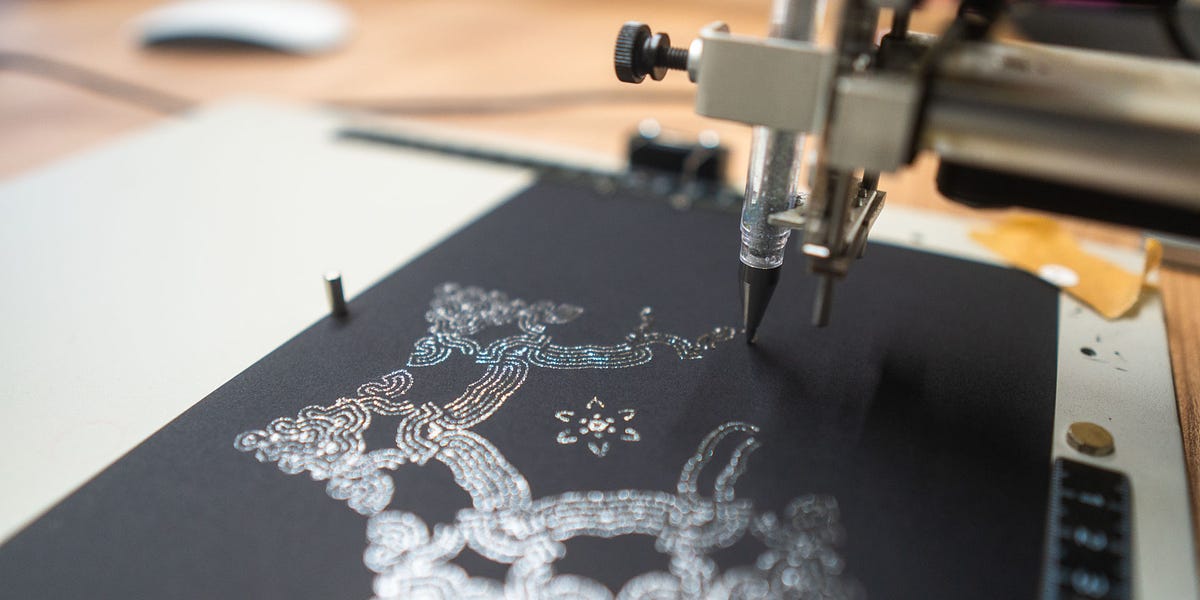
Highly recommend subscribing to Daniel's newsletter ✨
In issue #47 Daniel explains how Truchet patterns work and how to go about programming them. In #48 he explains how to optimize the generated patterns for the plotter, so that the machine can trace out continuous lines rather than drawing out individual tiles one at a time. And in this most recent issue, he explains the grid based Truchet pattern can be turned into a snowflake kind of shape by leveraging a cool Kaleidoscope effect.
Really cool stuff, at this point in time I am strategically planning the acquisition of my first plotting device 🤞
 Peter BaumanPeter Bauman (Monk Antony) is Le Random’s Editor-in-Chief.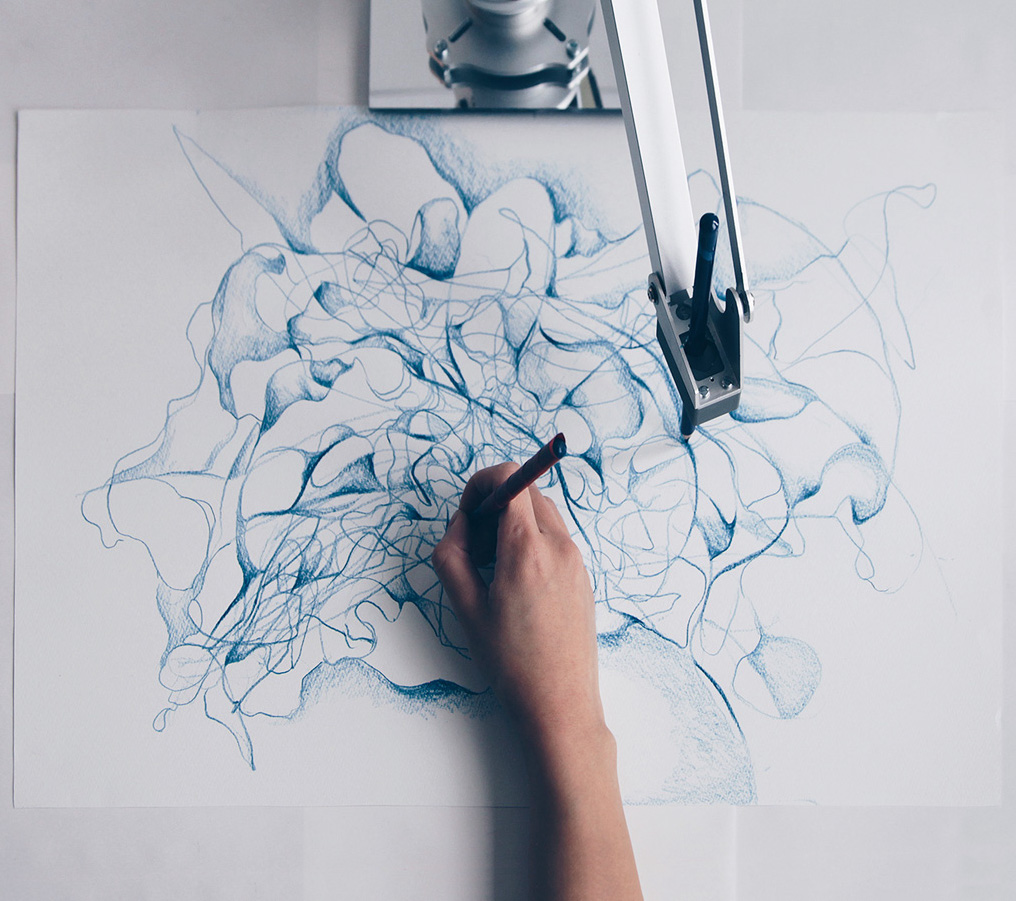
In this massive analysis, Monk tackles the philosophical component of his framework, namely autonomy. A big part of what makes generative art special as an artform, has to do with how practicing artists relinquish control over the art making process to some extent. And this is reflected by how much of the contemporary discourse around the artform is about the machine as a collaborator rather than simply a medium. Monk provides a logical breakdown of everything that's involved.
One of the talks features Marcin Ignac, founder of Variable.io a generative design and data visualisation studio, and co-creator of Nodes.io—naturally, that makes Marcin an accomplished generative artist. He showcases some of the projects he's worked on and lets us in on his practice, with more than a few really interesting nuggets in throughout.
He briefly talks about his 2022 fxhash project Urban Flora, which I remember being mesmerized by when it first came out. He provides some details about the algorithm that powers the project, explaining that it is in fact created with Nodes.io. He reveals that the hollow geometric structures, that are central to each artwork, are created according to Conway's polyhedron notation.
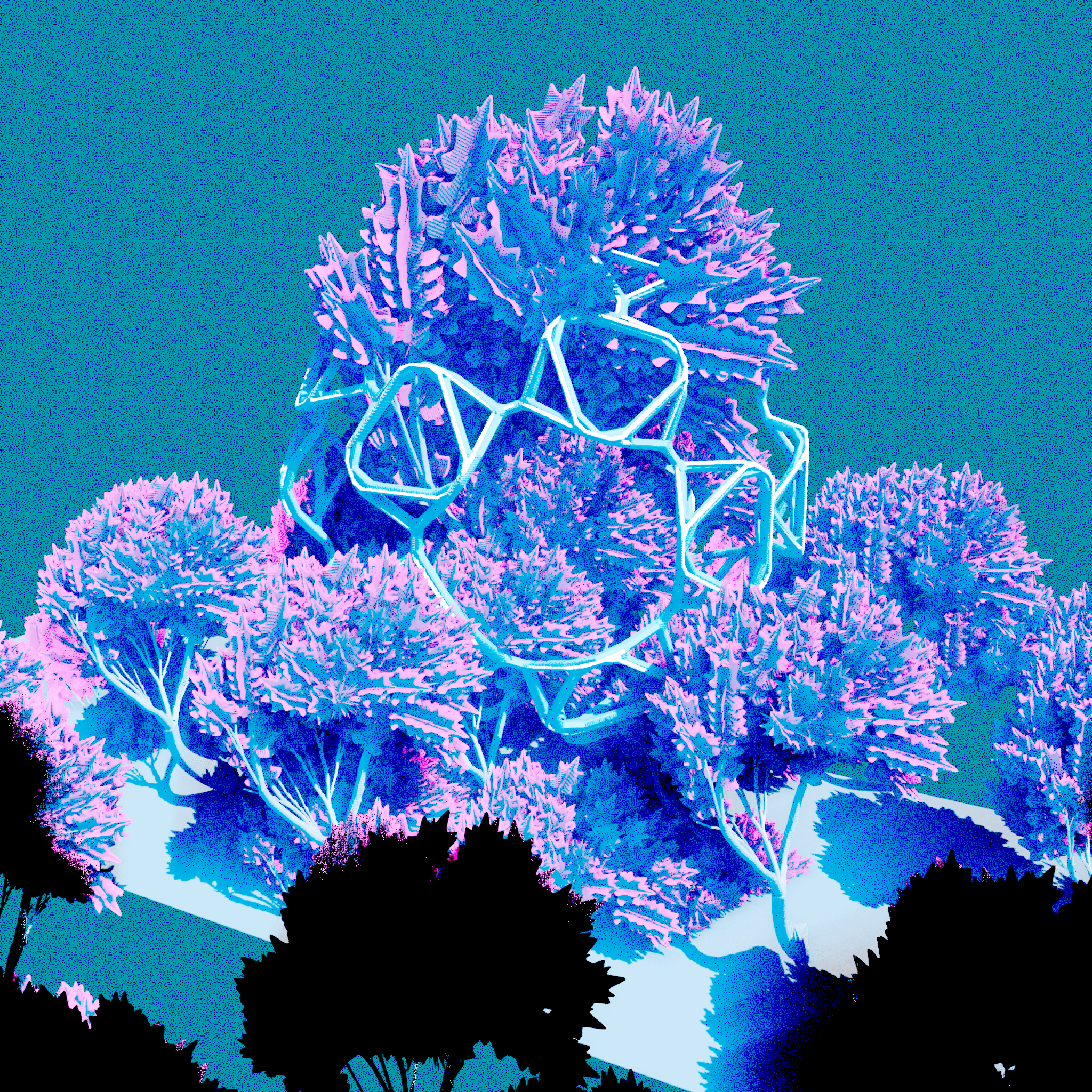
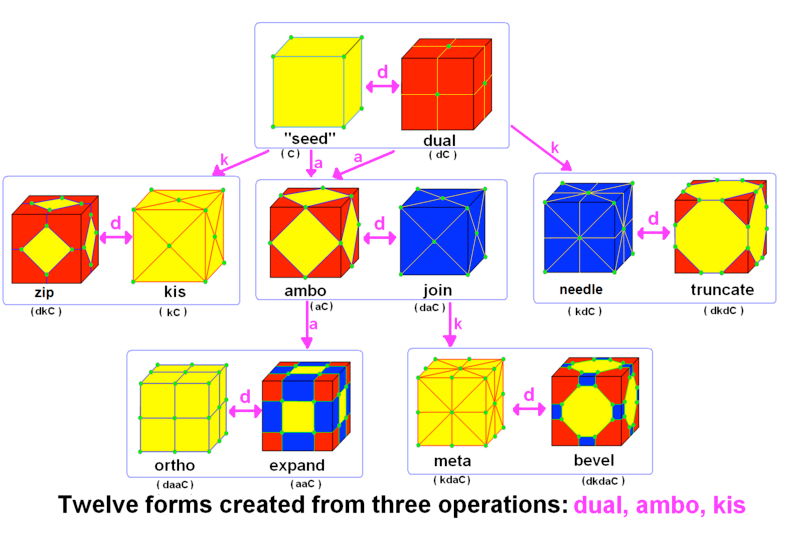
This notation essentially describes a family of symmetric 3D shapes that can be derived from a seed polyhedron (a starting shape) through modifications, such as slicing and cutting edges for example.
Tech & Web Dev
 Adam Argyle
Here's the couple of the new features that I am personally excited about:
- Cross-Document View Transition: I haven't used this one yet, but it seems like the most exciting one out of the bunch. You've probably visited a website before where transitions between different pages happens seamless, usually with a quirky animation. Previously this was difficult to do, or required an animation library like GSAP to take care of it, now it's possible to support it with CSS.
- Scroll-Driven Animations: Scroll-driven animations on the other hand, is the new feature that I've seen being hyped the most this year. Now you can basically tie animations directly to a user's scrolling behavior—which you might want to keep in mind before you bust out GSAP the next time.
- @property: The
@propertyrule made a big buzz this year, and were hailed as next-gen CSS variables. We had a look in issue # of the newsletter, but in brief its a more refined way to define CSS variables that allows the assignment of a specific type, and initial value, and inheritance rules! This subsequently enables things that were previously impossible to do, such as animating colored gradients for instance.
Sadly Firefox, my browser of choice, still lags significantly behind Chrome.
 X
X
AI Corner
A recent article by Steve Sewell describes this beautifully, as it perfectly captures this experience. Steve also provides a useful graphic to illustrate the problematic at hand:
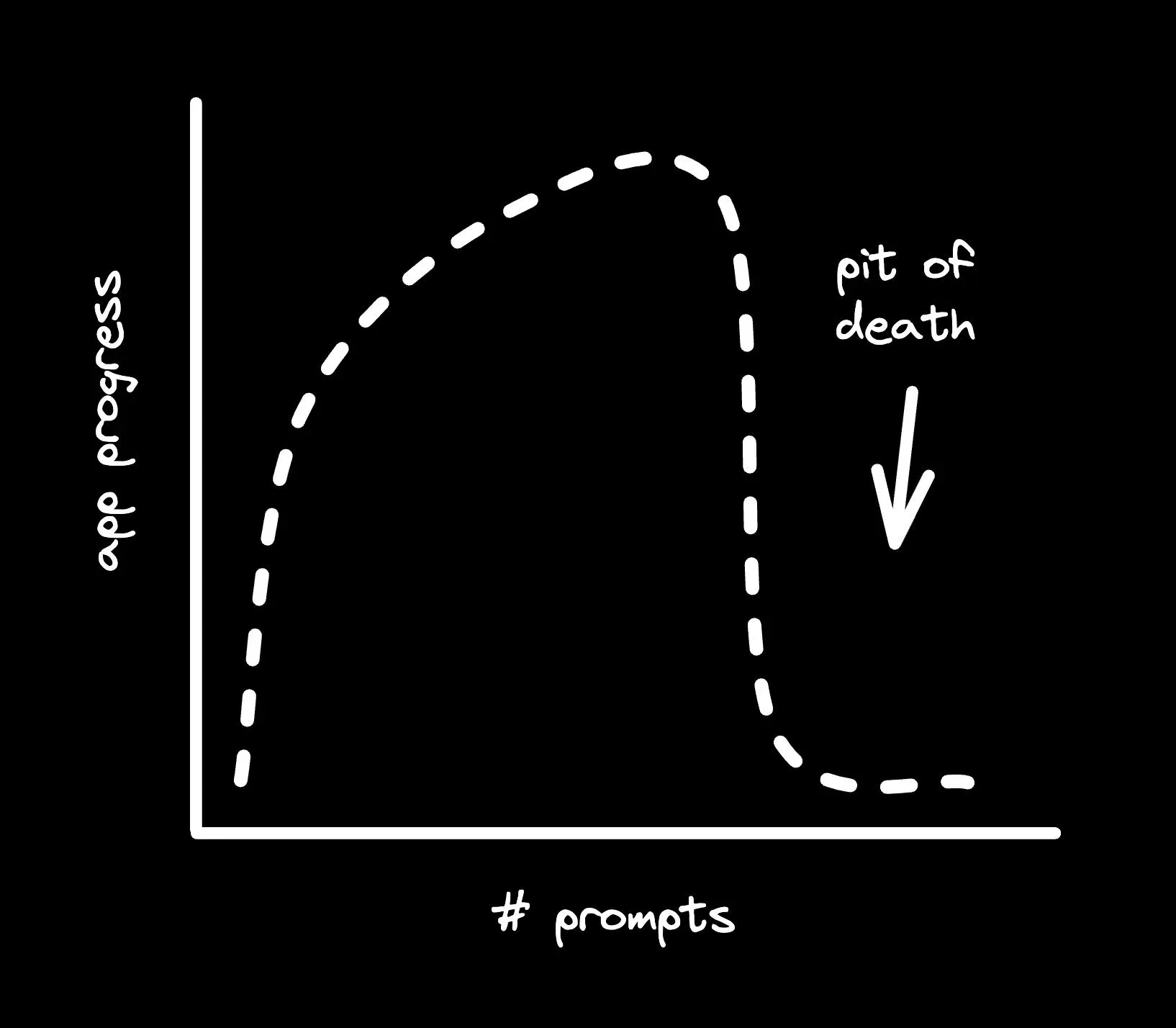
The beautiful thing here is that it makes dev skills just that much more valuable—only if you have the necessary knowledge will you be able to go in and fix whatever is at the root of this pit of death. Also, let's not even get started talk about building maintainable codebases.
But the danger isn't limited to just those that are at the start of their career, but also those in higher positions, if they are reluctant to adopt the chat driven paradigm. This makes me think of something John Maeda stated about the transformative effect of AI, that I think is very relevant here.
The good programmers will only get better and the novice programmers will have a chance at creating computational works that would have been previously impossible for them to achieve in their lifetime.


The key take-away: developers and companies must adapt to CHOP to stay competitive in the evolving software landscape, as it represents a major shift in how coding is done today and in the near future.
Music for Coding
This week I've been listening nonstop to Sempiternal, Bring Me the Horizon's fourth studio album. It's definitely on the heavier side and might not be for everyone, but I found it incredibly refreshing. From what I’ve read, the album is quite polarizing actually—it marks a major shift in the band’s sound, with them adopting a more melodic approach. I can’t speak to the contrast with their earlier work since I have yet to listen to their other albums, but this one really resonated with me:
And that's it from me—hope you've enjoyed this week's curated assortment of genart and tech shenanigans!
Now that you find yourself at the end of this Newsletter, consider forwarding it to some of your friends, or sharing it on the world wide webs - more subscribers means that I get more internet points, which in turn allows me to do more internet things!
Otherwise come and say hi over on TwiX, Mastodon, or Bluesky and since we've got also got a discord now, let me shamelessly plug it here again. If you've read this far, thanks a million! If you're still hungry for more generative art things, you can check out last week's issue of the newsletter here:
 Ahmad Moussa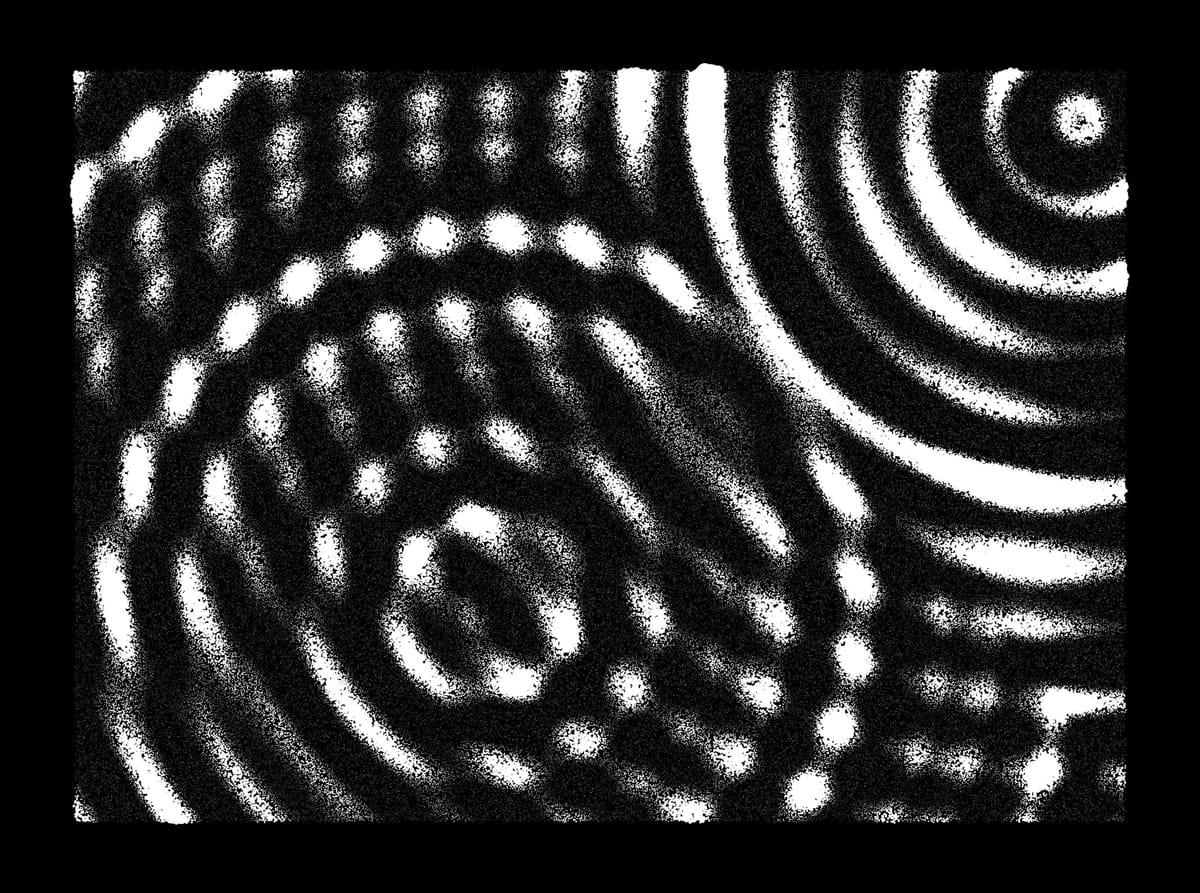
And a backlog of all previous issues can be found here:
Cheers, happy coding, and again, hope that you have a fantastic week! See you in the next one!
~ Gorilla Sun 🌸